
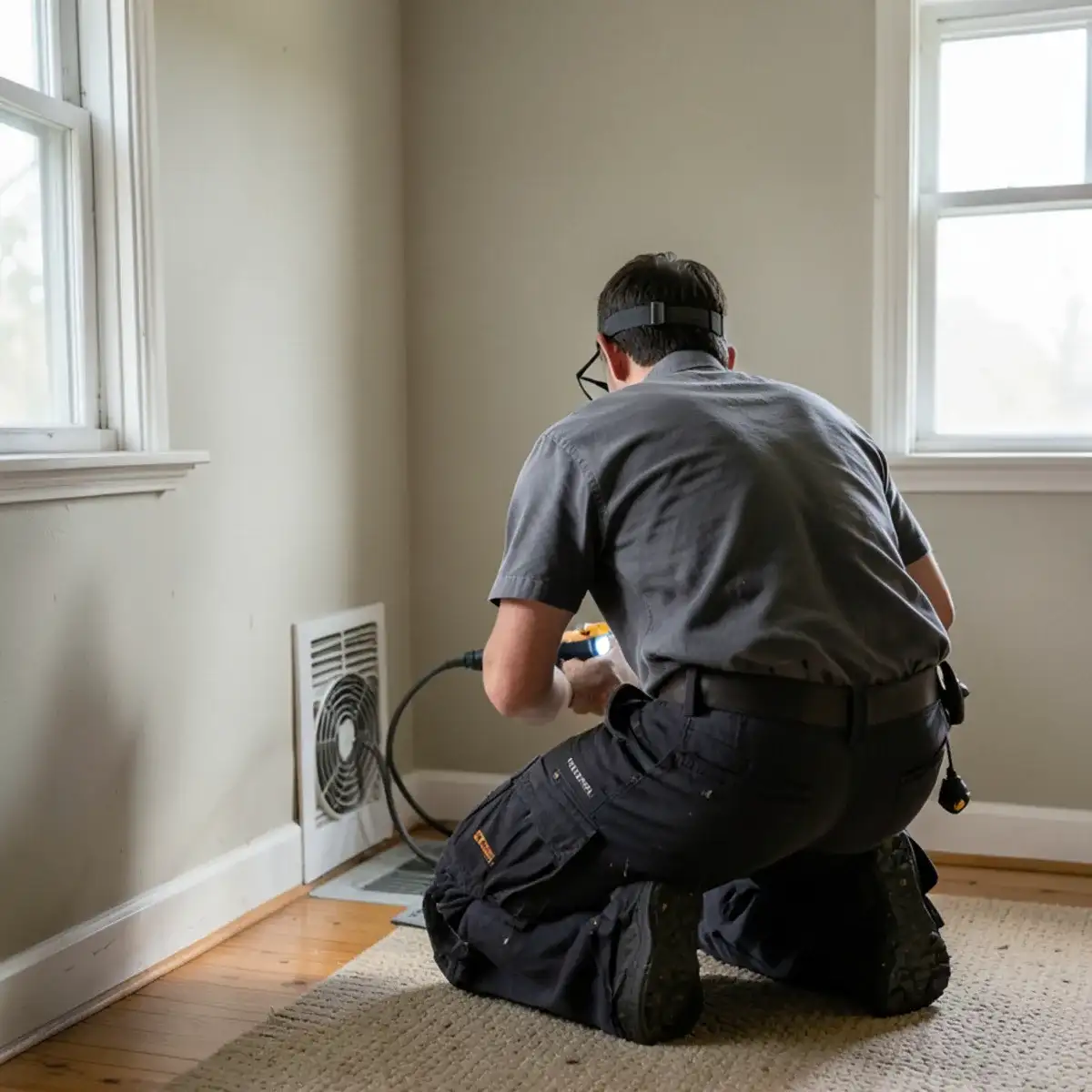
Is duct cleaning worth it? As a routine service, usually not. The EPA does not recommend it on a schedule and says it has never been shown to prevent health problems. It does make sense in three specific situations: visible mold on hard ducts, vermin, or ducts so clogged that debris blows into the house.
Is duct cleaning worth it? The short verdict
No, if your reason is general dust, allergies or a coupon in the mailbox. Yes, if someone has looked inside and found one of the three problems below. The question is less "are my ducts dirty?" and more "is this dirt doing anything?" Most of the time, it is not.
We offer air duct cleaning, so we have a reason to tell you otherwise. Our advice follows the EPA's anyway, because it is the most useful thing we can tell you before you spend the money.
Tell us what your system is doing
Our office is open Monday to Friday, 8 AM to 4 PM. Call and we will sort out the next step.
What does the EPA actually say?
The EPA does not recommend cleaning as routine and advises doing it only as needed. Its guidance rests on four points.
- Health. In the agency's words, "Duct cleaning has never been shown to actually prevent health problems."
- Dust. Studies do not conclusively show that dirty ducts raise dust levels in a home, and a thin layer of dust in a duct carries no evidence of risk.
- Chemicals. Research has not shown that biocides or sealants work well here, and their health effects are not well understood.
- Approval. The EPA does not certify, endorse or approve any duct cleaning company. A logo claiming otherwise is not from the agency.
The EPA leaves one door open. You may choose cleaning simply because ducts get dirty over time, as long as the job is done properly and nothing is sprayed in that you did not agree to. That is a preference and a fair one, but it is not a health measure.
When does cleaning make sense, and when does it not?
Look inside before you decide. The EPA's three cases all rely on something you can see or show.
| Situation | Worth it? | What to do first |
|---|---|---|
| Substantial visible mold inside sheet metal ducts | Yes | Fix the moisture source, or it will come back |
| Rodents or insects living in the ducts | Yes | Deal with the infestation and entry points |
| Ducts clogged with dust and debris that reaches the house | Yes | Find where the debris is entering |
| Heavy drywall dust after a remodel | Likely | Have the ducts looked at, and change the filter |
| Dust on registers or furniture | No | Check the filter and return leaks |
| Allergy symptoms with no visible problem | No | Better filtration, humidity control |
| A new home purchase, just to be safe | No | Inspect, then decide |
| A yearly reminder postcard | No | Spend it on a tune-up instead |
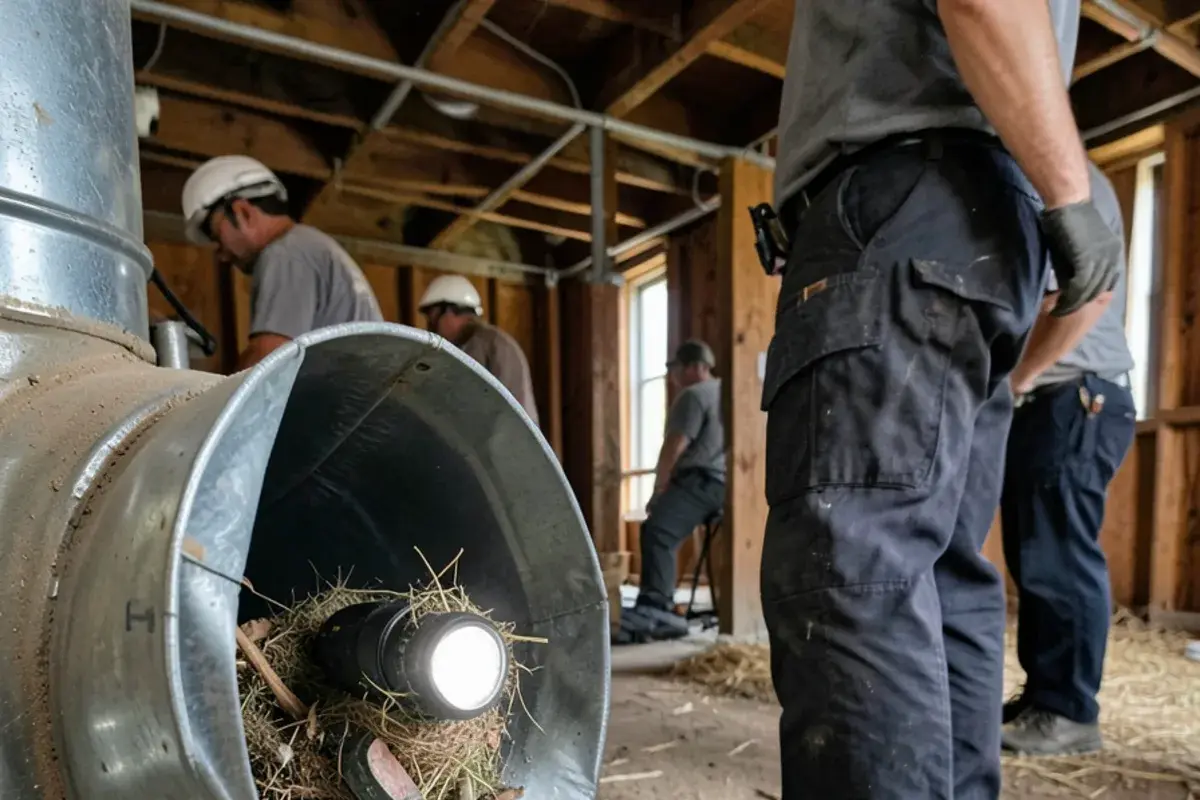
Mold deserves one more caution. What looks like mold is not always mold, and the fix is the moisture, not the scrubbing. Around Belle, as with much of rural Missouri, crawl spaces and basements are the likely sources of that moisture, so start your search there.
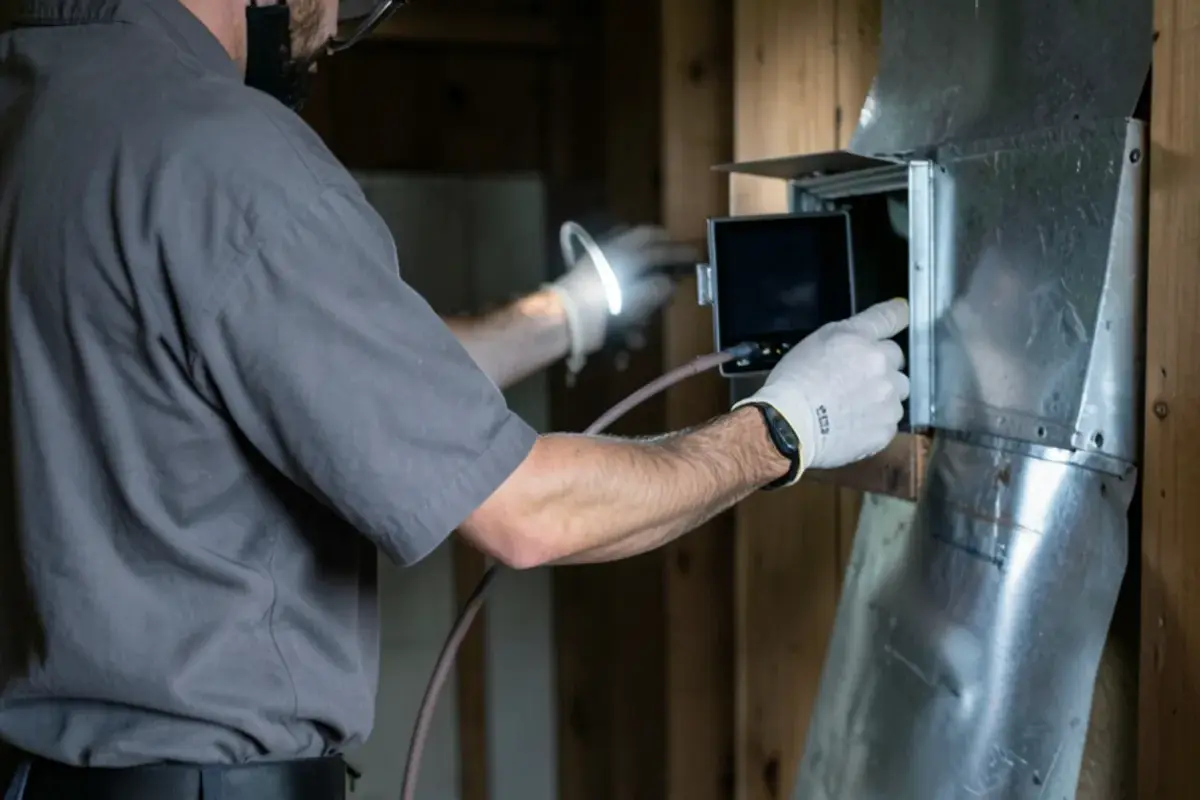
How can you look inside your own ducts?
You can get a good first look with a screwdriver and a phone. Turn the system off, remove a supply register and a return grille, and hold your phone in the opening with the light and camera on. Take a few photos as far down the run as you can reach.
Here is how to read what you find.
- A thin gray film on the metal. Normal. It is what the EPA calls a light layer of dust, and it is not a reason to hire anyone.
- Clumps, nesting material or droppings. Something got in. Find the entry point first, or the problem will return.
- Drywall dust or construction debris. Common after a remodel when the system ran during the work.
- Dark, fuzzy patches that smear. They might be mold. Do not scrub them, and keep in mind a lab is the only way to be sure.
Do not push tools or a vacuum wand into lined ducts or duct board, since those surfaces tear easily. Send your photos to whoever you are talking to, and ask them to point at the problem they plan to fix. If the answer is general, so is the benefit.
What are the red flags in a sales pitch?
Walk away from any of these. The EPA warns about the first two directly, and the rest follow from its guidance.
- Sweeping claims about health benefits.
- Cleaning sold as a routine part of maintenance.
- A very low coupon price that grows once the crew is inside.
- Pressure to spray a biocide or sanitizer. The EPA says no chemical biocides are registered for use in internally insulated duct systems.
- A sealant pitched as a coating to stop dust or mold. The EPA generally does not recommend sealants, and says never to use them on wet duct liner.
- No offer to show you the inside of the ducts, before or after.
A poor job can also leave you worse off. The EPA cautions that bad work can release more contaminants into the house or damage the system.
What does duct cleaning cost?
The EPA says services typically range from $450 to $1,000 per heating and cooling system. System size, access, climate and contamination level all move the number. That is the agency's general figure, not our price, so have any provider itemize every step in a clear, upfront quote.
The EPA also suggests written estimates from at least three providers, reference checks and confirmation that the provider follows National Air Duct Cleaners Association standards. For fiberglass duct board or lined ducts, ask how they will avoid damaging the liner.
A proper job puts the whole system under negative pressure with a collection vacuum, and it covers the supply and return runs, the blower, the coil and the drain pan. A cleaning that skips the air handler leaves dirt in the part that matters most.
Ask what you will get at the end, too. A fair job leaves you with before and after photos, sealed access openings and a fresh filter, so you can see what your money changed.
Where will the same money do more?
For most homes, three other jobs beat cleaning.
- Seal the ducts. ENERGY STAR says a typical house loses 20 to 30 percent of the air in its ducts to leaks. Sealing cuts that loss and closes return leaks that pull in dust. Our duct repair page explains the work, and this guide covers the signs of a leak.
- Upgrade the filter. A deeper media filter catches what is in the air now. See our air purifiers and filtration page.
- Fix the moisture. Humidity control prevents the problem that makes cleaning necessary in the first place.
What we tell customers who ask about cleaning
Ask what the cleaning will change. If nobody can point to a problem, keep your money. If there is mold, vermin or debris, clean the ducts, and fix the cause in the same project.
If you live near Belle, we are about 49 minutes and 42 miles from you, so please call first to confirm scheduling. A photo of what you found, through the register or at an open joint, can often answer the question before anyone makes the drive.
Not sure if yours qualify? Give us a call at (209) 563-1270, weekdays 8 to 4, describe what you see and we will tell you if cleaning is worth doing.
Brian Grannemann
Owner, Brian Grannemann Services Inc, Hermann, MO. In business since 1998 across heating, cooling, electrical and plumbing work.