
Air Conditioning
AC Installation in Hermann, MO
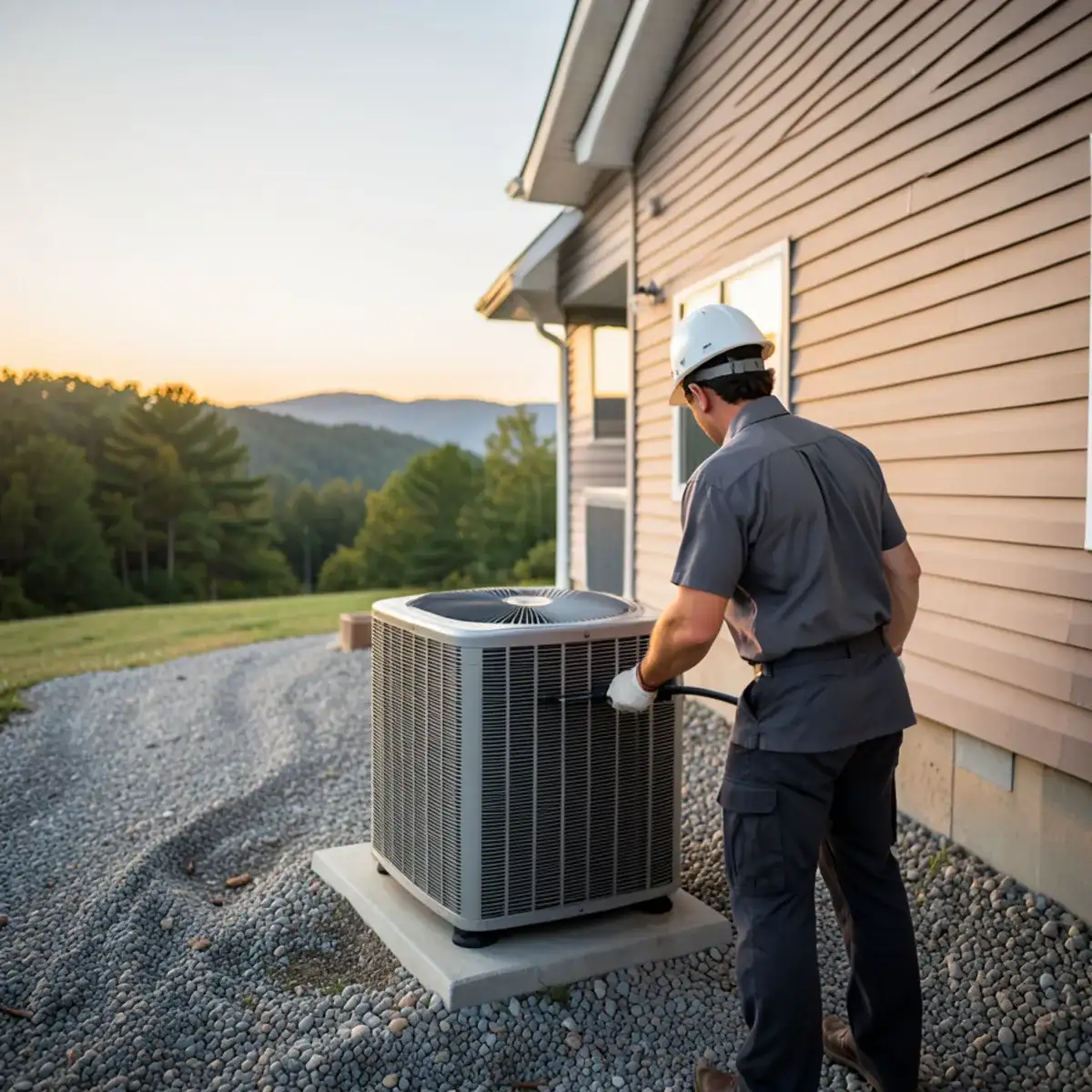
AC installation in Hermann starts on paper, not in the driveway. For a home adding central air for the first time, or a house still being built, we work out the cooling load, the duct path and the electrical feed first, then quote the job before any equipment is ordered.
- 4.7 on Google(15 reviews)
- Serving Hermann since 1998
- Office at 124 E 10th St
Which first-time central air installation fits your house?
This page covers new air conditioning where none exists today. If a central system is already in place and has failed or aged out, our AC replacement page is the one you want. For a first system, your starting point decides most of the scope.
| Starting point | Usual approach | Main trade-off |
|---|---|---|
| Working furnace and ducts, no AC | Add an indoor coil at the furnace and an outdoor unit | Heating ducts may need changes to carry cooling air |
| Radiators, baseboard or wall heat, no ducts | New air handler and ductwork, or a ductless system | Duct routes cost the most and take the most space |
| House under construction | Design equipment and ducts from the plans | Decisions must come before framing closes up |
| One addition or problem area | Often ductless instead of a central system | Serves a zone, not the whole house |
The U.S. Department of Energy describes central air as the most even cooling for a home, and also warns it can be expensive to install without ductwork already in place. If you have no furnace either, price a heat pump alongside it, because one outdoor unit can then handle both seasons.
Need AC Installation?
Our office is open Monday to Friday, 8 AM to 4 PM. Call and we will sort out the next step.
AC system sizing: what the load calculation settles
Size the system with an ACCA Manual J load calculation, never by square footage. An analysis of 40 Manual J calculations on ACCA's blog ran from 624 to 3,325 square feet per ton, and every one came in above the 400 to 600 rule of thumb still quoted in the trade.
Oversizing costs you comfort here. PNNL's Building America guidance explains that an oversized unit reaches the thermostat setting before moisture can condense on the coil, so the house cools while humidity climbs. In the river valley, that is the difference between comfortable and clammy.

Ducts come next
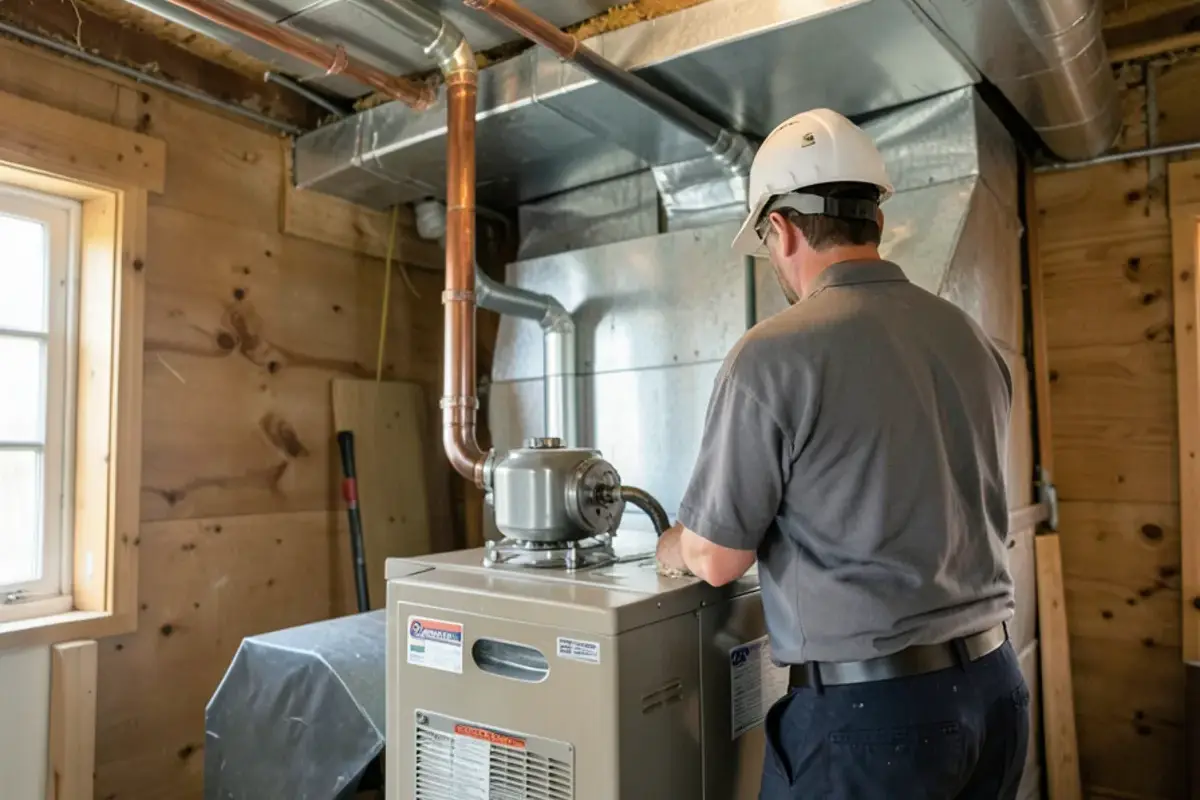
ACCA Manual D sizes the ducts, and Manual S guides equipment selection, with cooling capacity up to 15% over the calculated load. On a house with heating ducts, we check whether the trunk and returns can carry cooling airflow. The Department of Energy's advice is simple: ducts should be sealed and connected without sags or excessive bends.
Power, drainage and placement
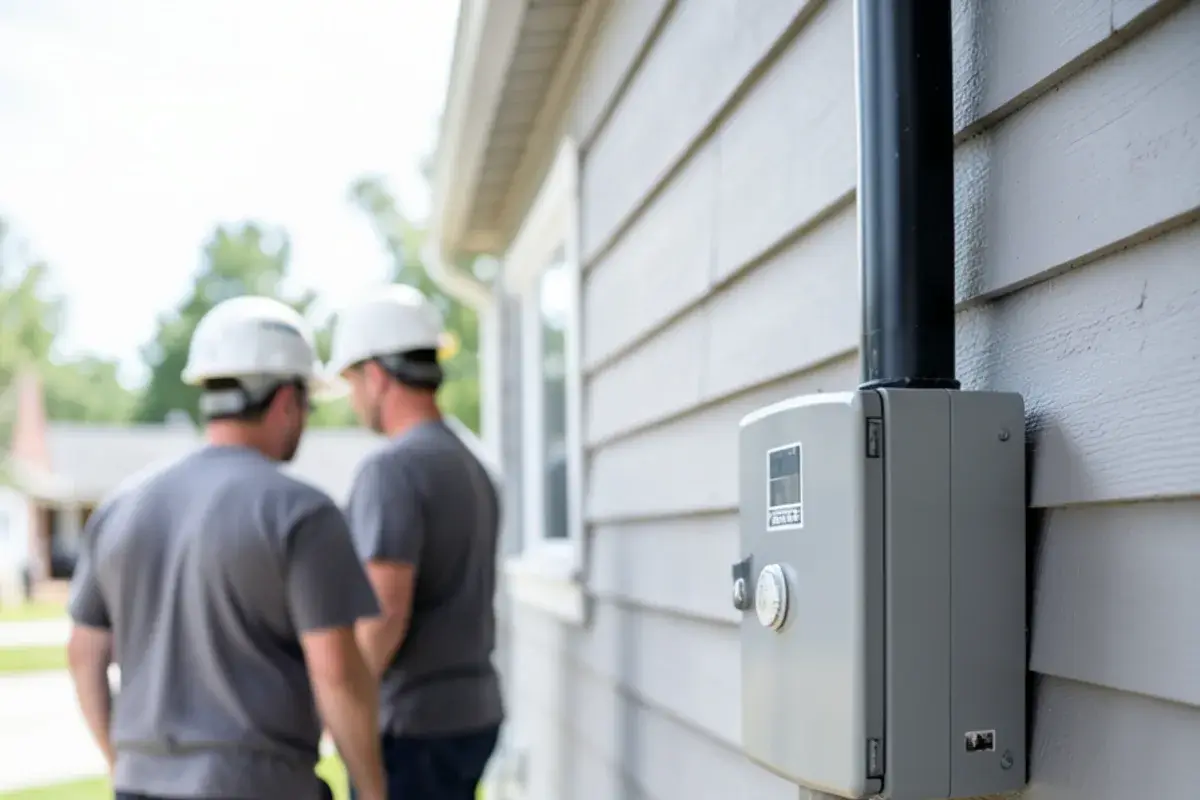
A first system needs a dedicated circuit, room in the panel, a condensate route and a level spot for the outdoor unit. Natural Resources Canada advises keeping refrigerant lines as short as possible. On new construction it also suggests a frame on the house, so the unit stays level as backfill settles.
What is included in an AC installation
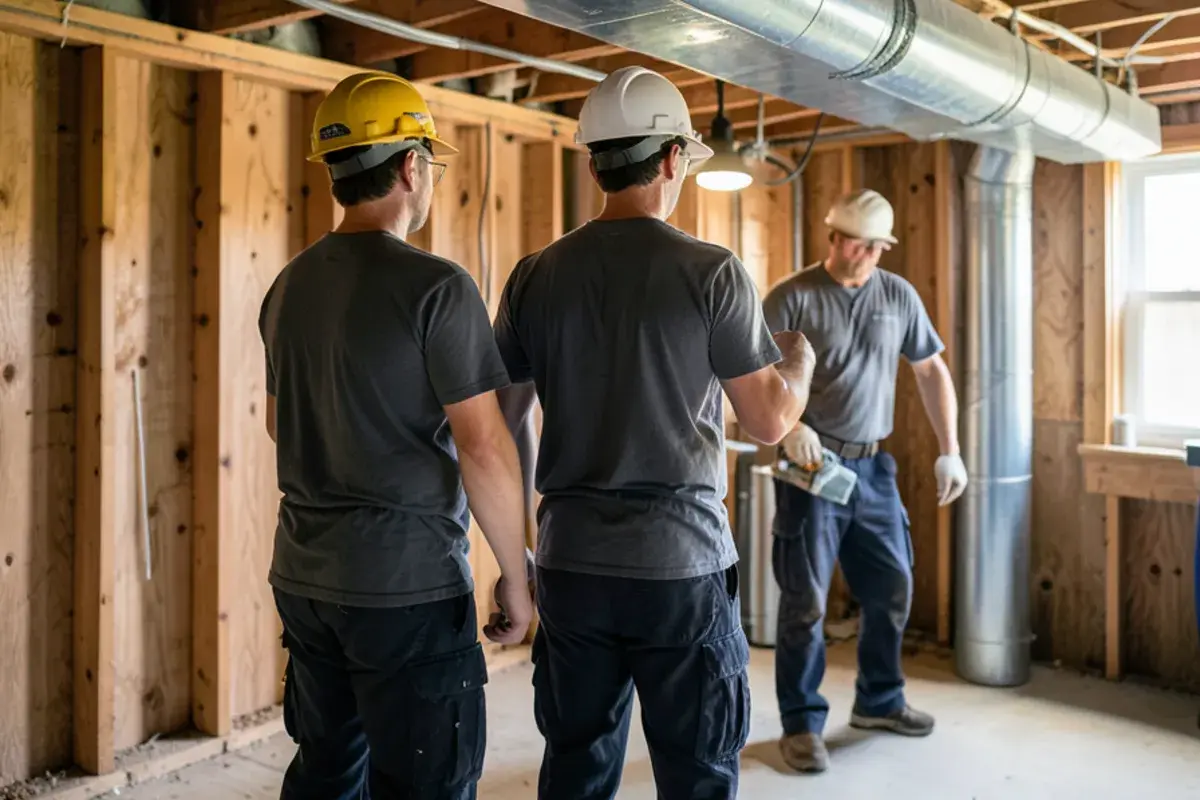
Ask any contractor to put these items in writing. Our quote names the scope before we start.
- A Manual J load calculation for the house as it is, or as drawn
- Equipment selection: outdoor unit, matched indoor coil or air handler, and thermostat
- A duct plan, covering new runs, changes to existing ducts and return air
- Refrigerant lines, with the wall opening sealed against air and noise
- The electrical feed and outdoor disconnect
- A condensate drain, routed so overflow cannot reach a finished ceiling
- Startup, refrigerant charge and airflow checks, with a walk-through of filter and thermostat
How a first-time install runs, step by step
- We walk the house or review the plans, and measure what the load calculation needs.
- We run the load, choose the equipment and lay out the duct routes.
- You get a clear, upfront quote, and we settle who pulls the mechanical permit.
- Ductwork goes in first. On a new build that is the rough-in, before insulation and drywall.
- We set the indoor coil or air handler, and then the outdoor unit on its pad.
- We run the lines, connect power and the drain, and pressure-test the refrigerant circuit.
- We evacuate the lines, charge the system and start it.
- We measure airflow and temperature split, then show you the filter and thermostat.
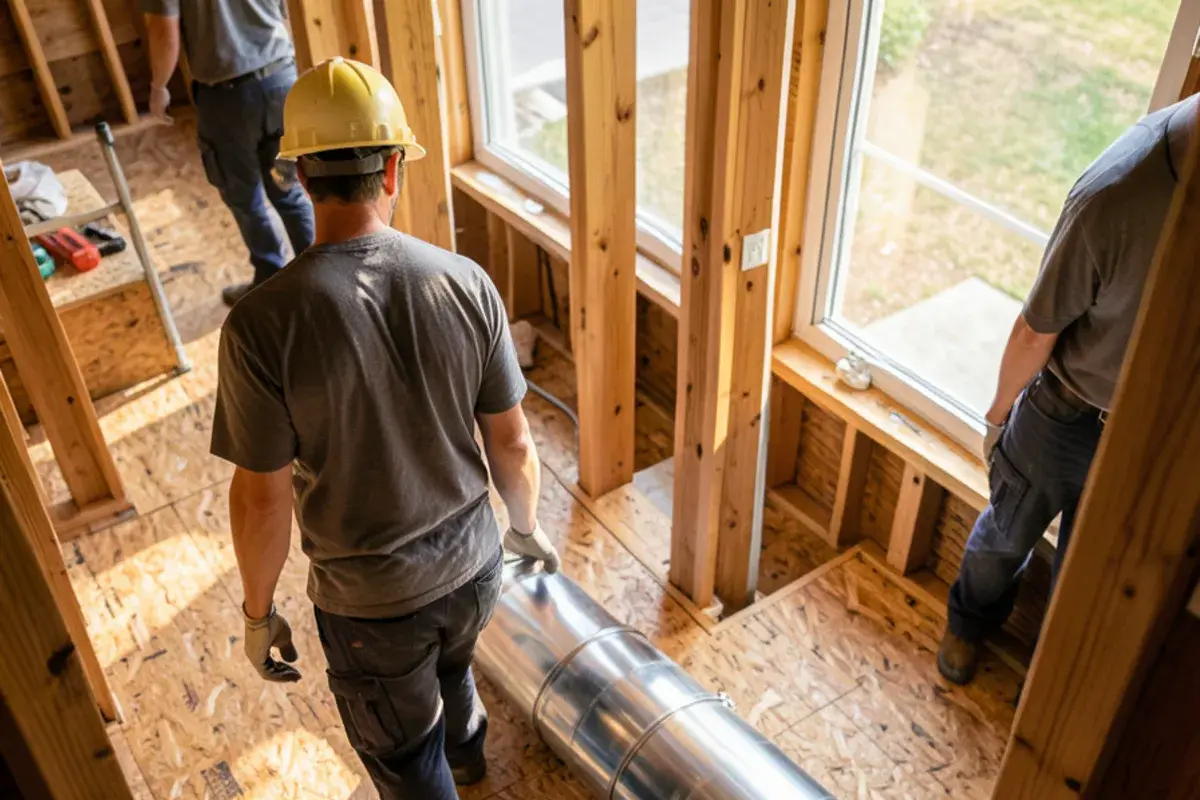
The duct work sets the calendar. A furnace-and-ducts house has far less to build than a house with none, so we give you the schedule with the quote. Builders should expect two visits, one at rough-in and one at finish.
How much does central air cost to add?
Existing ductwork is the biggest factor. PickHVAC's 2025 national guide puts installation at $2,500 to $7,500 with ducts in place and $6,000 to $12,000 with new ductwork. These are outside figures, not our prices, so ask us for a quote on your house.
Five things move the number:
- Ductwork: none, partial or a full new system
- Size and efficiency: the tonnage from your load calculation, and the SEER2 rating you choose
- Electrical: a new circuit, or panel work on an older service
- Access: tight attics, finished basements and long line runs
- Furnace condition: an old blower or cabinet may not suit a new coil
There is no federal credit to count on for a 2026 install, since 25C stopped covering equipment placed in service after December 31, 2025. Missouri has no state credit either. Check with your tax adviser.
Permits and refrigerant rules for new systems
Missouri has no statewide HVAC contractor license as of late 2026, so permits and contractor rules are set city by city and county by county. Ask city hall or the county what applies at your address, and ask who pulls the mechanical permit.
Federal rules still apply. The EPA requires new split systems installed after January 1, 2026 to use refrigerant with a global warming potential below 700. The federal minimum for a split-system AC in the North region, which includes Missouri, is 13.4 SEER2 under 45,000 Btu/h.
Why Brian Grannemann Services for a first central air system
- New construction is listed among our trades on Google, alongside heating and cooling, so a builder's schedule is familiar ground.
- Electrical and plumbing are on that list too, which helps when a new system needs a circuit or a drain route.
- We have been in business since 1998 and keep an office at 124 E 10th St, so you can sit down with the plans.
- Stephanie H. wrote that Brian "consistently shows up when promised, completes the work correctly the first time." That counts on a build with other trades waiting.
Caring for a new system, and where we install
Check the filter monthly through the first summer, because new construction dust loads it quickly. Keep the outdoor unit clear of mulch and shrubs, then book a spring AC tune-up from the second year on.
Call (209) 563-1270 with your plans or your address. We plan first-time systems from Hermann across the region, including Washington, New Haven, Warrenton and Union.
Calling is fastest
Ask about AC Installation
Calling gets you an answer sooner, especially if the house is cold or hot right now. If it can wait, send the details and our office will get back to you during business hours.
Smell gas? Do not use this form. Leave the building and call from outside.
What customers say on Google
4.7 on Google(15 reviews)“I can’t say enough good about Brian and his company. They are my go to guy’s. I’ve had them work for me about a half dozen times now. No need to look elsewhere. They are fair and responsive to your needs.”
“Brian consistently shows up when promised, completes the work correctly the first time, and provides quality products. I cannot recommend him more highly.”
“Quick and great response to air conditioning repair.”
Good to know
AC Installation questions
Can you add central air to a house that has no ducts?
Yes, though ductwork becomes the main job. We start by finding routes through closets, attics and basements that can carry supply and return air. If a house has no room for that, as many older brick homes do not, a ductless system may be the better answer. We will price what actually fits.
My furnace works fine. Can central air be added to it?
Usually, yes. An indoor coil goes on the furnace, an outdoor unit goes on a pad and refrigerant lines connect the two. What we check first is the blower, because it must move cooling air, and whether the ducts can carry that air. An older furnace may change the plan, so bring its age into the conversation.
How big an air conditioner does my house need?
A Manual J load calculation answers that, and square footage alone cannot. Two homes the same size near Hermann can differ widely depending on insulation, window area, shade and air leaks. The load sets the tonnage, and Manual S then guides the equipment choice so the unit is not oversized for a humid river-valley summer.
When should AC be planned on a new build?
Before framing is finished, and earlier is better. Duct runs need chases, soffits and joist bays that are easiest to plan from the drawings. Bring us the plans, the insulation and window specs and your builder's schedule. New construction is one of the trades on our Google profile, so that conversation can start early.
Can a new central air system still use R-410A?
No. The EPA's rule requires any new split system installed after January 1, 2026 to use a refrigerant with a global warming potential below 700, and a system in a newly built home counts as new. Leftover R-410A equipment cannot be used to build one. Expect R-454B or R-32 on your quote.
Is there any rebate on a first-time central air system?
It depends on your utility. The federal 25C credit closed at the end of 2025 and Missouri has no state credit, so check with your tax adviser. Hermann city customers are on municipal utilities, where Ameren programs should not be assumed. Ameren customers outside town should check the company's current chart.
Sources
- ACCA HVAC Blog, Manual J load calculations vs. rules of thumb
- PNNL Building America Solution Center, Whole-House Dehumidification
- U.S. EPA, Frequent Questions on the Phasedown of Hydrofluorocarbons
- U.S. Department of Energy, Energy Saver 101: Home Cooling
- Natural Resources Canada, ENERGY STAR central air conditioners
- PickHVAC, Central air conditioner prices and installation cost (2025)
- U.S. EPA, Section 608 Technician Certification
Where we handle ac installation
- WarrentonGrowing I-70 town with newer homes.
- WashingtonRegional hub with historic and newer housing.
- New HavenRiverside town with historic homes.
- RhinelandDirectly across the river, with flood-aware rebuilt homes.
- BergerSmall town on the Berger Bottom along Route 100.
- MorrisonRoute 100 community with older farmhouses.
- UnionCounty seat with subdivisions and commercial work.
- SullivanI-44 town serving a wide rural area.
- St. ClairSmall city along the I-44 corridor.
Based at 124 E 10th St in Hermann, we work across Gasconade County and the towns around it, including Owensville, Morrison, Rhineland, Berger. See all the areas we serve.
AC Installation from a Hermann company
A Hermann company since 1998. Tell us what is going on and we will tell you what happens next.
- 4.7 on Google(15 reviews)
- Serving Hermann since 1998
- Office at 124 E 10th St