
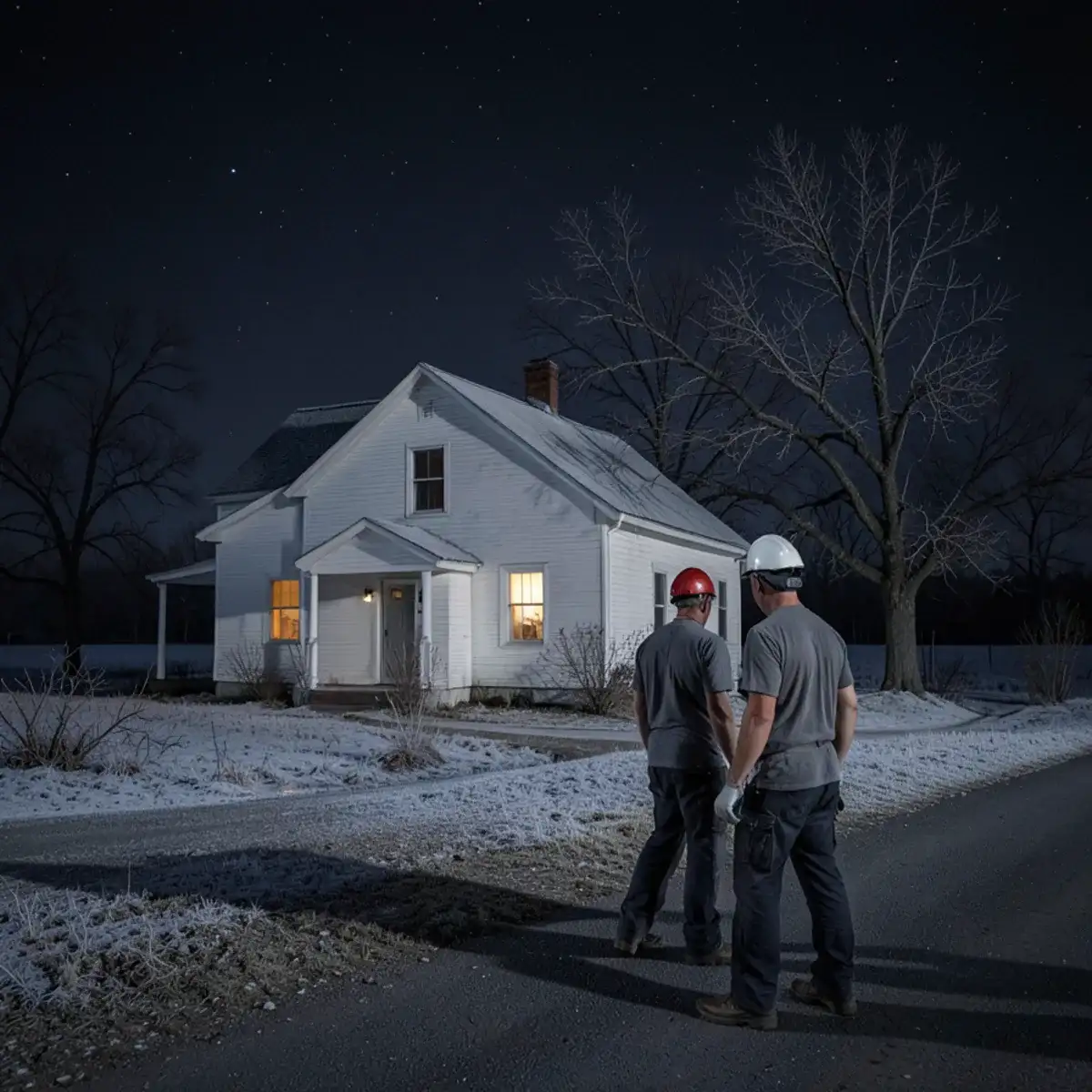
No heat at night? What to do comes down to one safety gate and four checks. Rule out a gas smell and a carbon monoxide alarm before anything else, then look at the thermostat, the power, the filter and the fuel. If the house is still cooling off after that, protect your pipes and call.
Stop here first: is this a gas or carbon monoxide problem?
Two things outrank a cold house, and neither one waits for troubleshooting. Answer these before you touch the furnace.
If neither applies, carry on. If you are unsure about a smell, treat it as gas and follow the first box. Our gas smell guide has the full sequence.
Tell us what your system is doing
Our office is open Monday to Friday, 8 AM to 4 PM. Call and we will sort out the next step.
Four safe checks, in this order
Each check takes a minute or two and needs no tools. Stop at the first one that explains the problem.
- Thermostat. Set it to heat, raise the setting five degrees above room temperature and replace the batteries if the screen is blank or faint. Give the furnace a few minutes, since many run a short start-up sequence before the burners light.
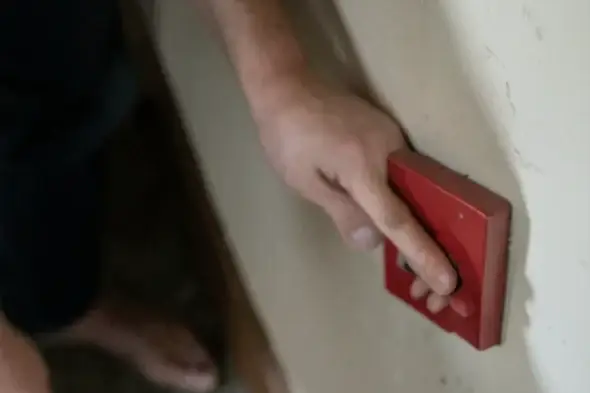
- Power. Find the furnace switch, which looks like a light switch on or near the unit, and confirm it is on. Check the breaker and reset it once if it tripped. Make sure the lower blower door is fully seated, because a loose panel holds open a safety switch and the furnace will not run.
- Filter. Pull it and hold it to a light. A clogged filter overheats the heat exchanger, which trips the limit switch and kills the burners. Replace it and try again.
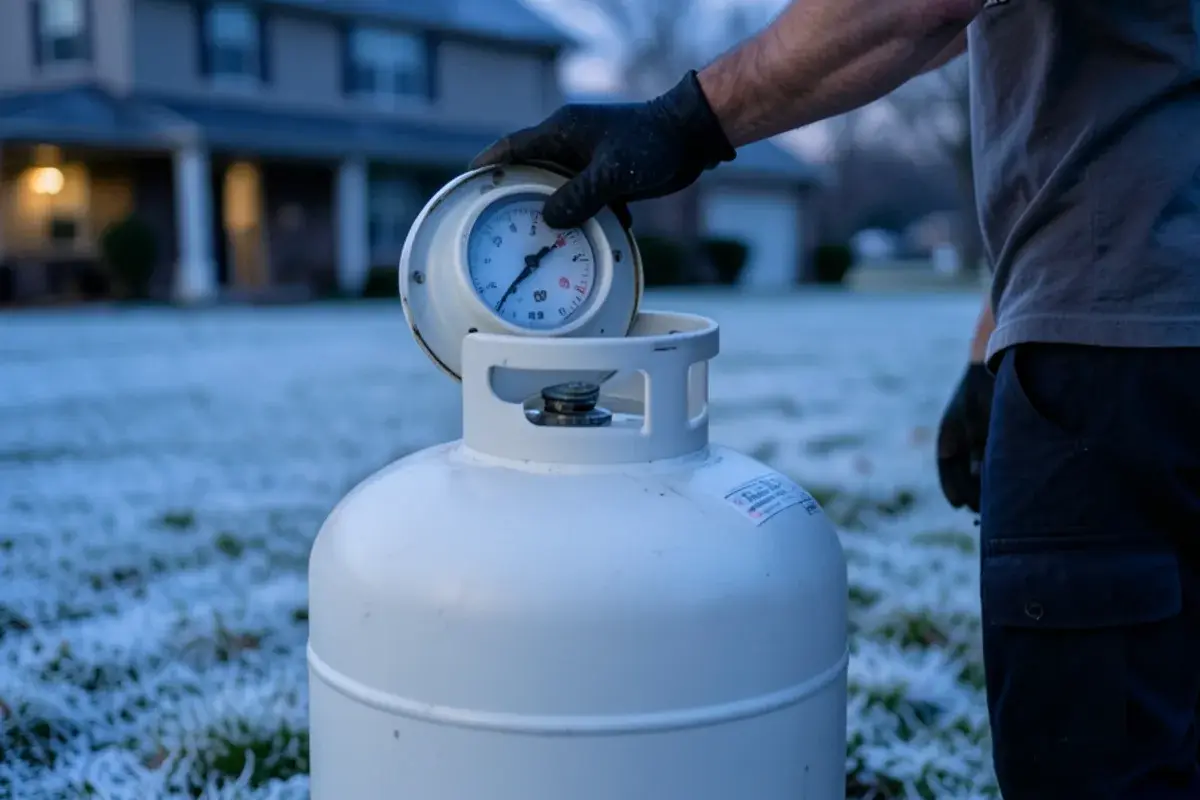
- Fuel. Check whether another gas appliance works. On propane, read the tank gauge. If the tank is at or near empty, call your supplier and let them restore service, rather than trying to light anything yourself.
Now for the things to leave alone. Do not reset a tripped limit switch again and again, do not jump or bypass any safety control and do not take the burner compartment apart. A furnace that locks itself out is often doing its job, and repeated restarts on a cracked heat exchanger or blocked vent are the opposite of safe. Our furnace repair page explains what a technician tests next.
What if the house heats with electricity?
The gas checks above do not cover every home. Electricity is the main heating fuel in 45.1% of occupied homes in Gasconade County, per the Census Bureau's latest five-year estimates, so a no-heat night here is often a heat pump or electric furnace problem.
On a heat pump, look at the outdoor unit first. A coat of frost is normal, and a defrost cycle clears it. A solid block of ice is not. Set the thermostat to emergency heat if it has that setting, which shuts the outdoor unit off and runs the backup strips alone. The house should start to warm, and the bill will climb, but that buys time until someone can look at it.
If the air stays cold on emergency heat too, the fault is likely in the backup heat or the air handler. Check that system's breakers, since many electric systems use a separate breaker or a double one for the heat strips. Reset once, then leave it. A heat strip breaker that trips twice has found a real fault, so stop there and call.
No heat, what to do about the pipes?
Start protecting pipes once the furnace has been down for a couple of hours on a freezing night. Hermann averages about 116 freezing nights a year (BestPlaces), with a winter average low around 24°F, so this is not a rare event here.
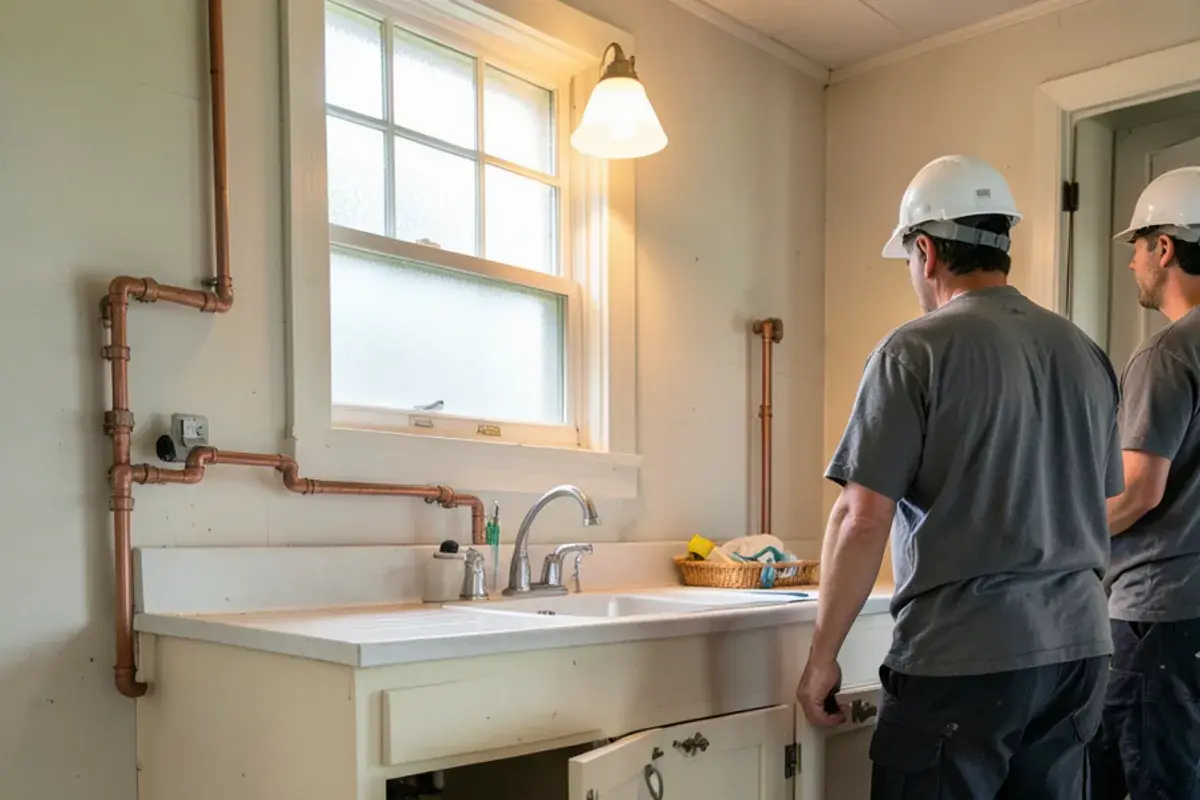
- Open cabinet doors under sinks on outside walls.
- Let faucets on exposed lines run at a slight drip, hot and cold.
- Close garage doors if supply lines run through the garage.
- Know where your main water shutoff is before you need it, and make sure everyone at home knows too.
The Red Cross advises holding the heat no lower than 55°F, and warns against thawing a pipe with a blowtorch, a kerosene or propane heater, a charcoal stove or any other open flame. Older farmhouses are the hardest case. Route 100 farmhouses around Morrison, about 22 minutes and 16 miles from our office, often have plumbing in crawl spaces and uninsulated walls, so start early there.
If a pipe does burst, shut off the main, then take photos before any temporary fix. Missouri's insurance regulator says freeze damage is usually a covered loss on a homeowner policy, and it asks people to hold on to receipts for emergency fixes.
How to stay warm without creating a new danger
The workaround can be more dangerous than the cold. Use this as your rule sheet.
| Option | Verdict | Why |
|---|---|---|
| Layers, sleeping bags, one closed room | Yes | Your own body heat holds better in a small room |
| Electric space heater | Yes, with care | Red Cross: plug it directly into an outlet and turn it off when you leave the room or go to sleep |
| Gas oven or range | Never | CDC: "Never heat your house with a gas oven." |
| Charcoal grill indoors or in a garage | Never | Rolla Fire and Rescue warns against both because of carbon monoxide |
| Portable generator | Outside only | CDC: more than 20 feet from windows, doors and vents, never in a home or garage |
If everyone is in one room and the house keeps dropping, go to relatives or a warming site. A cold house can be repaired. Check that the battery-powered CO alarm is working before you settle in, because CPSC recommends one on every level and outside sleeping areas.
What to have ready before you call
A short list saves a second trip, and the second trip is what you are trying to avoid on a freezing night.
- The fuel: natural gas, propane or electric.
- What the furnace does: nothing, clicks, tries to light and quits, or blows cold air.
- Any flashing light code on the control board, counted out.
- The model and serial number from the data plate, or a photo of it.
- The indoor temperature and whether anyone in the home is elderly, very young or unwell.
What we tell customers on a no-heat night
Call as soon as you know the furnace is down, not at bedtime when the house is already at 50°F. The office is staffed weekdays from 8 to 4, but call (209) 563-1270 when it happens and tell us what is going on. We do not promise overnight response, because we cannot know what a given night will bring. Jo M.'s Google review describes one honest example: Brian came out in the evening on one of the coldest days in decades to repair a faulty furnace. It shows what one customer experienced, and you should still have the safety list above ready.
The strongest protection is boring. Our emergency furnace repair page covers urgent calls, but the plan starts in fall with a tune-up before freeze season, fresh CO alarm batteries and a spare filter on the shelf. The CDC advises having a qualified technician service fuel-burning equipment every year, and that visit is also when a worn igniter or weak flame sensor gets caught in daylight.
Sources
- U.S. CPSC, Carbon Monoxide Information Center
- CDC, Carbon Monoxide Poisoning Basics
- U.S. PHMSA, Recognizing and Responding to Pipeline Emergencies
- American Red Cross winter safety tips, as published by KBSI
- City of Rolla Fire and Rescue, Carbon Monoxide
- News Tribune, January 2026, Missouri DCI winter storm guidance
Brian Grannemann
Owner, Brian Grannemann Services Inc, Hermann, MO. In business since 1998 across heating, cooling, electrical and plumbing work.