
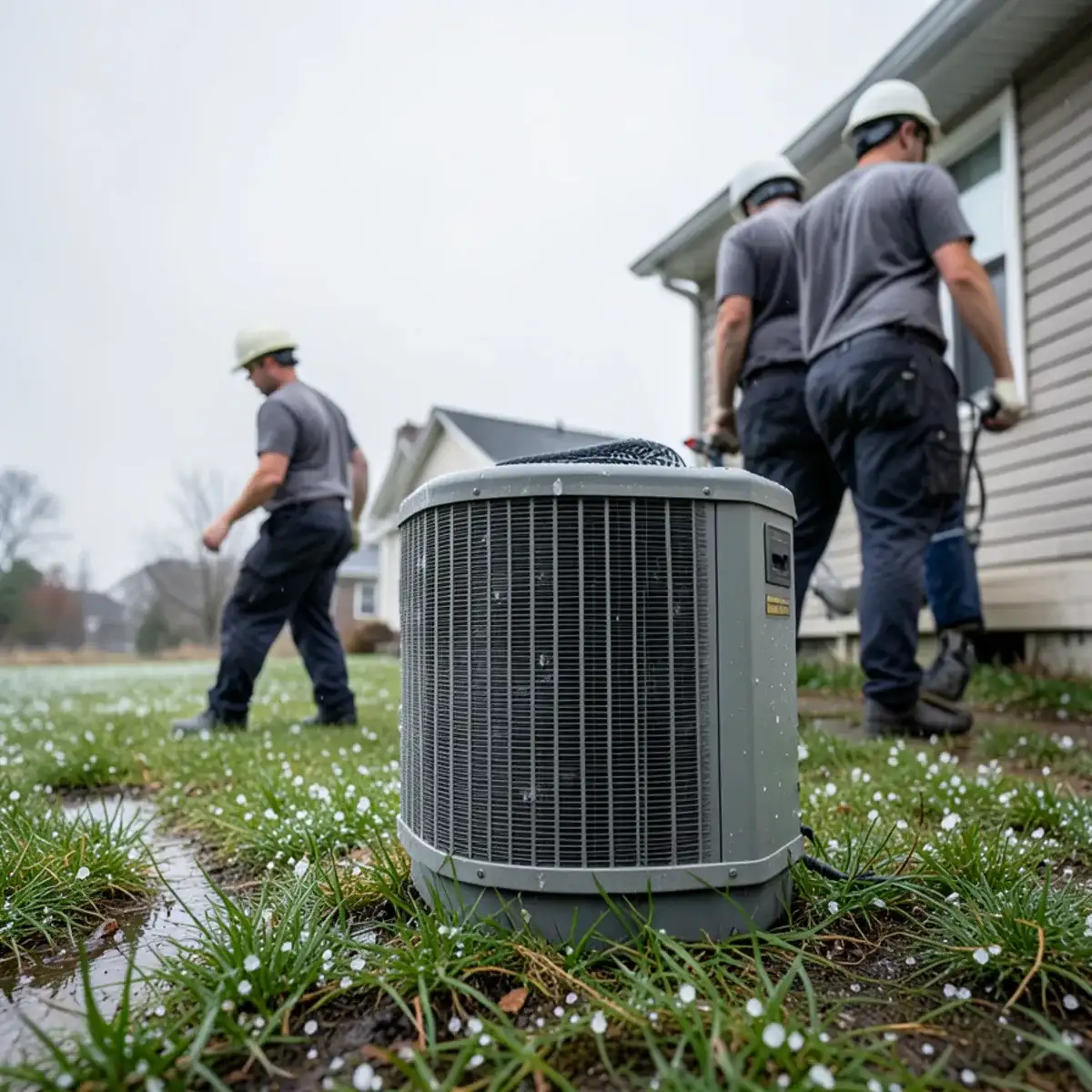
Does home insurance cover HVAC failures? It depends on what broke the system, not on the system itself. A standard policy generally responds to sudden damage from a covered event such as fire or a storm, and generally does not pay for wear, age or breakdown. Your own policy language decides, so read it alongside this guide.
Start with the cause, not the equipment
Ask what happened, because that is the first question an adjuster will ask. Consumer guides from insurers and Policygenius describe the same pattern: a central system usually counts as part of the dwelling, and a claim generally needs a covered peril. This table is general information, not coverage advice.
| What happened | Usual answer | What decides it |
|---|---|---|
| Fire, including smoke damage | Usually covered | Named peril under dwelling coverage |
| Windstorm or fallen tree | Usually covered | Sudden event, deductible may be separate for wind |
| Hail on the outdoor unit | Usually covered | Check for a separate wind and hail deductible |
| Lightning | Often covered | Proof of a strike or surge helps |
| Frozen pipes and resulting water damage | Most policies, per Missouri DCI | Whether heat was maintained, policy conditions |
| Flood or river water | Not in a standard policy | Needs separate flood coverage |
| Old age, wear, rust | Typically not covered | Missouri DCI lists wear and tear and deterioration |
| Lack of maintenance | Typically not covered | Missouri DCI names it |
| Mechanical or electrical breakdown | Usually excluded | Unless you bought equipment breakdown coverage |
Tell us what your system is doing
Our office is open Monday to Friday, 8 AM to 4 PM. Call and we will sort out the next step.
Why wear and tear is the line that matters
Insurance pays for sudden, accidental loss, not for equipment reaching the end of its life. A capacitor that weakens over eight summers or a heat exchanger that cracks after 20 winters is a maintenance cost in the eyes of a policy. The Missouri Department of Commerce and Insurance (DCI) says wear and tear, deterioration and lack of maintenance typically are not covered.
Be honest about the difference, because the line can get blurry. A compressor that burns out in August is breakdown. A compressor that fails right after a lightning strike on the property may be something else, and the evidence decides. Do not describe a failure as storm damage if you do not know that it was. Ask the technician what the part shows and let the facts stand.
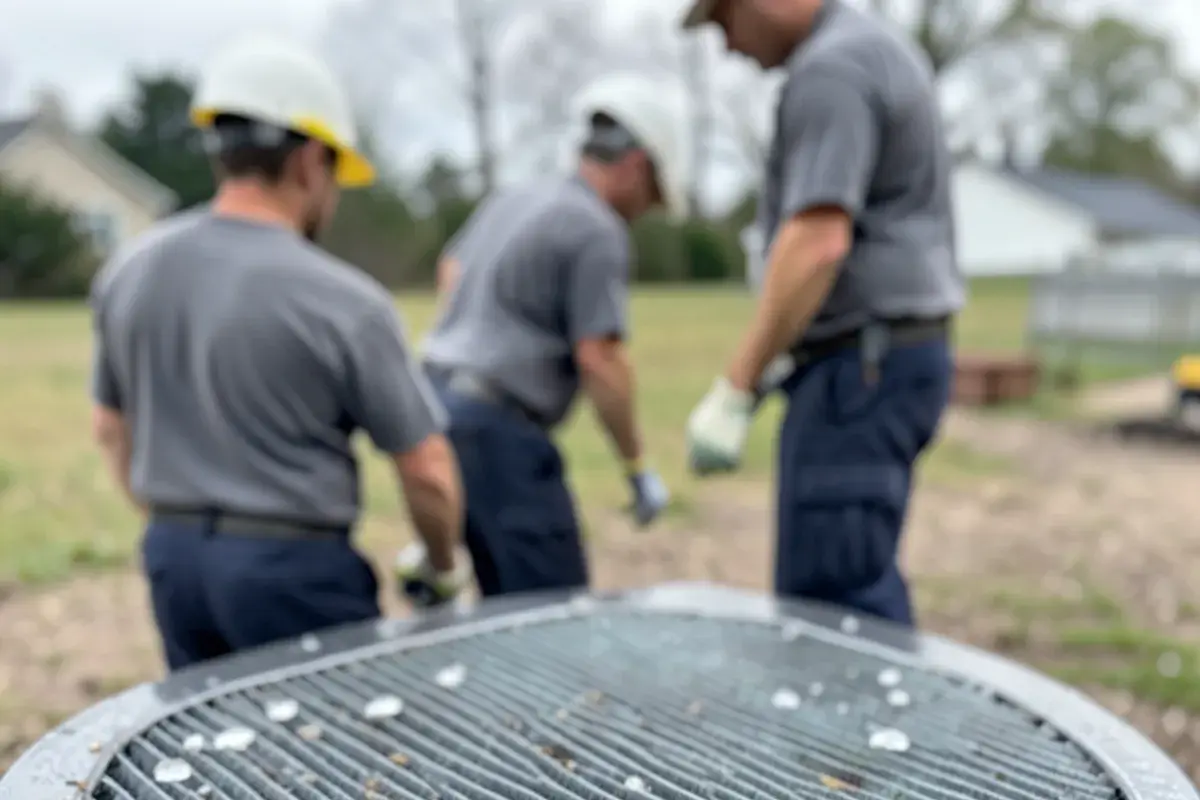
Rural homes face this most often, since a long exposed drive and open ground bring wind and hail straight to the outdoor unit. A home near Bland, about 43 minutes and 37 miles from our Hermann office, can wait a while for anyone to arrive, so good photos may be your only record of the first day.
What to do in the first 48 hours of a claim
Document first, repair second, and keep every piece of paper. DCI urges people to document damage quickly and safely, to take pictures before temporary fixes and to keep receipts for urgent patch-up costs.
- Make it safe. Shut the damaged system off. If you smell gas or see burned wiring, leave and call for emergency help before you think about paperwork.
- Photograph everything. Get wide shots of the house and unit, then close shots of damage and the data plate. Include the date if your phone stamps it.
- Call your agent or insurer. Report it promptly, and ask how they want estimates handled.
- Prevent more damage, cheaply. Tarp, shut valves and turn off power as needed, and keep those receipts.
- Keep the failed parts. Do not let a damaged coil or board go in the trash before the adjuster has decided.
- Get a written repair quote. Ask any contractor to name what failed, what caused it, if that can be determined, and what it will take to fix.
- Hold the settlement in writing. Do not sign away a claim or start large work before you know what the insurer approved.
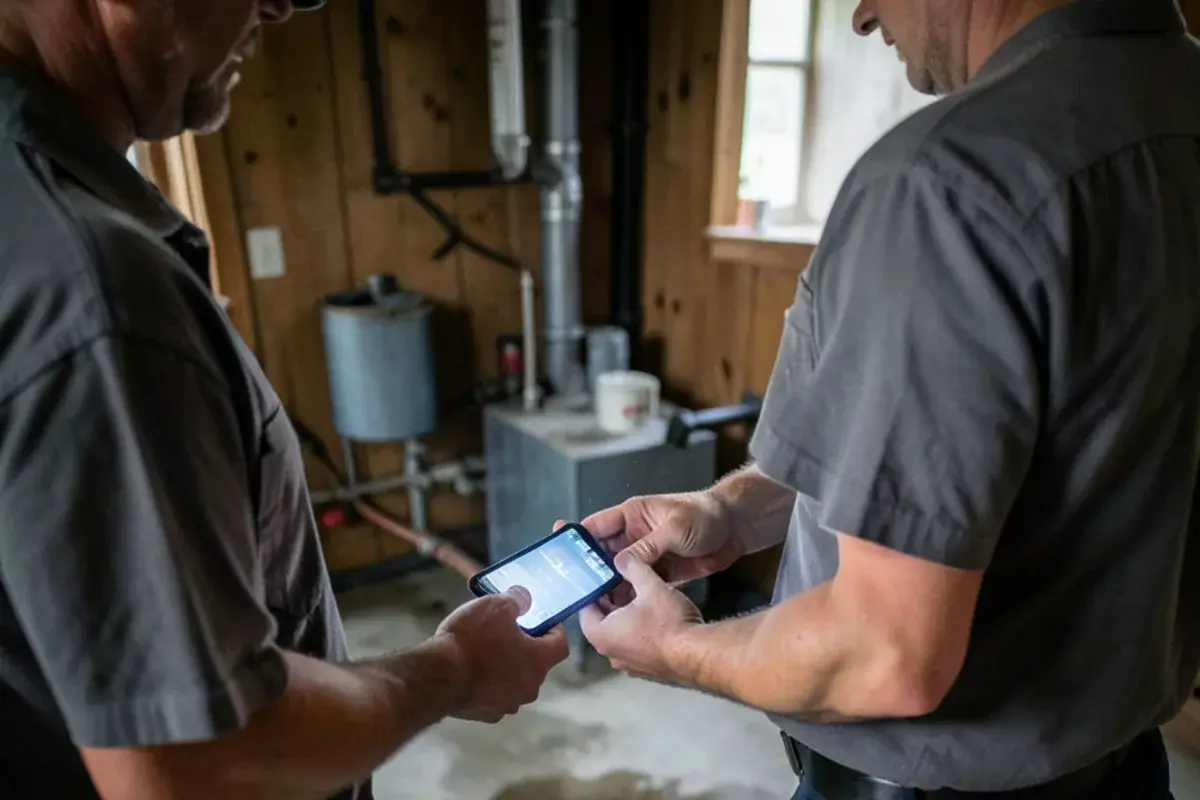
If the insurer and you cannot agree, DCI is the state regulator that takes consumer questions. Its hotline is listed on insurance.mo.gov.
How much would a claim really pay?
Do the math before you file, because coverage and payout are different questions. Four terms on your declarations page decide the number.
- Deductible. This comes off the top. If a hail-damaged condenser costs $2,000 to replace and your deductible is $1,000, the most you can see is $1,000.
- Separate wind and hail deductible. Some policies set this as a percentage of the dwelling limit. At 1% on a $200,000 home, that is $2,000, which can swallow a whole outdoor unit by itself.
- Replacement cost or actual cash value. Replacement cost pays to replace the item. Actual cash value subtracts depreciation, so a 14-year-old unit may be worth far less than a new one costs. Ask which applies to your system, and whether the answer changes once equipment passes a certain age.
- Like kind and quality. Policies usually aim to restore what you had, so an upgrade to a higher efficiency model may be your own cost.
Weigh one more thing: a small claim stays on your record, and it can affect what you pay or whether you can renew. Ask your agent how that works before you file, not after. A written repair quote gives you the number you need to decide, and getting one does not commit you to a claim. If the repair falls under your deductible, a claim gains you nothing.
The paper trail worth keeping before anything breaks
Keep a simple folder now. Because lack of maintenance is a typical exclusion, records of care help you if the cause is ever in question.
- Install date, model and serial numbers
- Tune-up receipts for AC maintenance and furnace service
- A current photo of the outdoor unit and the furnace
- Your policy's declarations page and any endorsements
- Your flood policy, if your land is anywhere near a creek or river
Does home insurance cover HVAC breakdowns at all? The gaps
Three products get mixed up here, and they do different jobs.
Equipment breakdown coverage is an add-on sold with some homeowners policies. It covers mechanical or electrical failure of home systems, for an extra premium. Limits, deductibles and age rules vary, so ask your agent what it would do for a 12-year-old furnace.
A home warranty is a separate service contract, not insurance. Read what it excludes, how it handles older equipment and who picks the contractor.
Flood insurance is its own policy. River-bottom and creek-side homes should not assume a standard policy helps when water reaches a basement furnace.
If you are shopping any of these, ask for the sample contract, not the brochure.
What we tell customers about insurance claims
Call your agent before you decide what a problem is worth, and call us to find out what actually failed. Our job is the equipment, so we will tell you what we find and quote the work before we start. We do not decide coverage, and neither should anyone who tells you a claim will surely pay. Keep that decision between you, your policy and your insurer.
For most broken systems, the honest path is a plain repair. Our air conditioning services and furnace repair pages cover the usual faults, and if storm damage is real, a clear quote is the document your adjuster needs. Call (209) 563-1270 to talk through what happened. Because Bland is nearly an hour out, calling first also lets us plan the trip.
Sources
- Missouri Department of Commerce and Insurance, winter weather guidance
- News Tribune, January 2026, Document winter storm damage quickly, DCI urges
- KY3, January 2026, Missourians urged to file claims after winter storm damage
- GEICO Living, Does Homeowners Insurance Cover Furnace?
- Policygenius, Does home insurance cover furnace replacement?
Brian Grannemann
Owner, Brian Grannemann Services Inc, Hermann, MO. In business since 1998 across heating, cooling, electrical and plumbing work.