
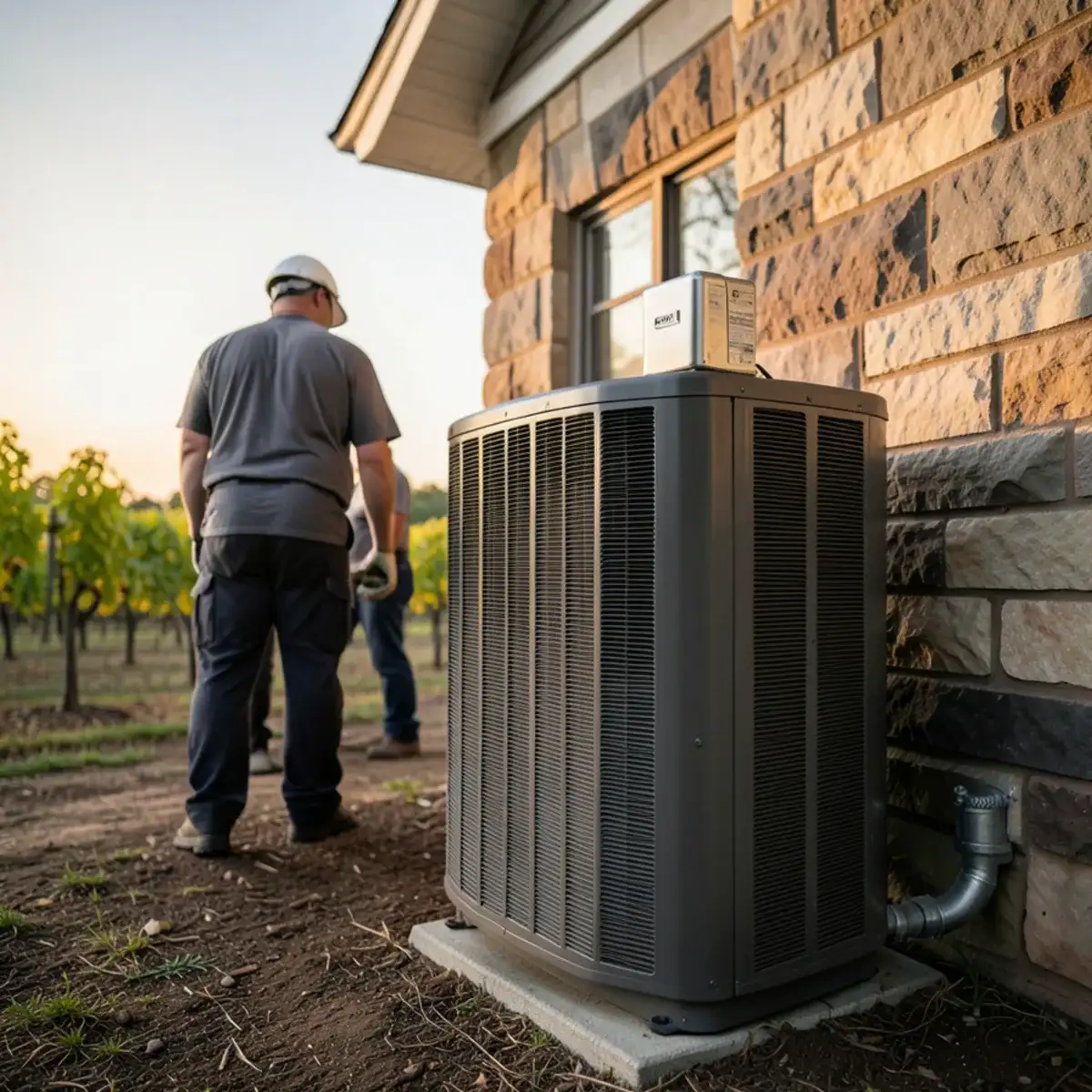
AC repair cost in Hermann is not published anywhere, so the honest answer uses benchmarks. Fixr's 2026 national average is $375, with most repairs between $250 and $700, and St. Louis labor runs $125 to $150 an hour (Angi, 2026). Those are outside figures, not our prices, and the table below says which are regional.
The benchmark table: parts, labor and who published them
Regional figures, not our prices. The first three rows are St. Louis benchmarks, the nearest market with published numbers. The rest are national, because no source publishes these parts for central Missouri. Everything is dated, and none of it is a quote from Brian Grannemann Services.
| Item | Published range | Coverage | Source and date |
|---|---|---|---|
| HVAC labor | $125 to $150 an hour | Regional: St. Louis | Angi, 2026 |
| AC tune-up | $125 to $200 | Regional: St. Louis | Angi, 2026 |
| Compressor repair | $750 to $2,000 | Regional: St. Louis | Angi, May 2025 |
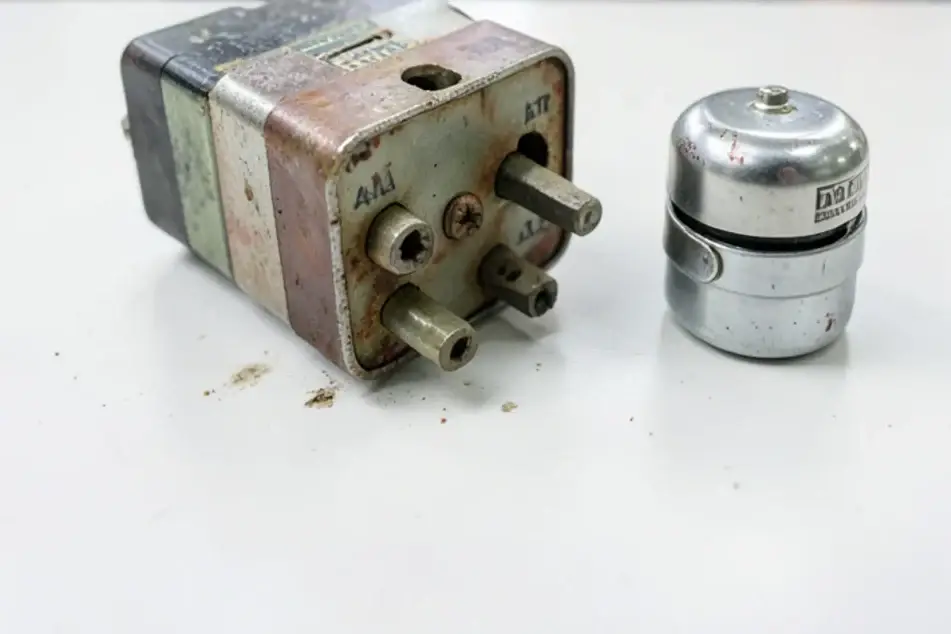
| Capacitor | $150 to $400 | National | This Old House, March 2026 |
| Contactor | $100 to $450 | National | This Old House, March 2026 |
| Thermostat | $150 to $500 | National | Fixr, January 2026 |
| Fan motor | $300 to $800 | National | This Old House, March 2026 |
| Refrigerant leak repair | $200 to $1,500 or more | National | This Old House, March 2026 |
| Evaporator coil | $700 to $2,500 or more | National | This Old House, March 2026 |
| Compressor replacement | $1,000 to $3,000 or more | National | This Old House, March 2026 |
Read the compressor rows together. A repair quoted in the St. Louis range and a full replacement quoted nationally overlap, and sources do not define the job the same way. Sources also disagree on small parts: Fixr puts a capacitor at $100 to $400. A range shows the rough size of a job. It does not tell you what your repair should cost.
Tell us what your system is doing
Our office is open Monday to Friday, 8 AM to 4 PM. Call and we will sort out the next step.
What moves AC repair cost in Hermann the most?
Five things separate a small invoice from a large one, and the part itself is only one of them.
Diagnosis time. A dead capacitor shows up on a meter in minutes. A slow refrigerant leak can take far longer to find, and labor is billed for the hunt, not just for the fix.
Refrigerant type. Production of R-22 ended in 2020, so older systems rely on reclaimed supply. R-410A is being phased down too. New residential systems from January 2025 use A2L refrigerants such as R-454B and R-32. Only a technician certified under EPA Section 608 may handle any of them.
Access. An outdoor capacitor is easy to reach. An evaporator coil in a tight attic or low crawl space takes more hours, and more hours at regional labor rates adds up quickly.
Timing. Fixr reports that rapid-response or weekend and holiday work typically runs 2 to 3 times the normal hourly rate, or $150 to $300 an hour nationally. Ask about after-hours pricing when you call, and consider whether a safe home can wait for a weekday.
Distance. Published city rates do not include a long rural drive. Berger is about 14 minutes and 9 miles from our Hermann office. Farther addresses take more time, so ask any contractor how travel is handled before the visit.
Three repairs worked through with the published numbers
These use only the benchmarks in the table above, so treat them as arithmetic, not quotes.
A capacitor on a five-year-old system. The published range is $150 to $400. Testing takes minutes and the part sits behind one panel, so this is the small end of AC work. It is also the repair a spring tune-up most often catches early.
A slow leak on a ten-year-old system. At $125 to $150 an hour, two hours of searching comes to $250 to $300 in labor before anyone has fixed anything. The published leak repair range starts at $200 and runs past $1,500, which is why the first question is how much searching the job will need.
A compressor on a fourteen-year-old system. The national range is $1,000 to $3,000 or more. Against a $4,800 to $7,800 St. Louis planning range for a new 3-ton system, that is about 21% to 63% of a replacement, going into equipment already near the 12 to 17 years commonly quoted. That is the case for getting both numbers.
What should an AC repair invoice show?
An itemized invoice is the easiest way to compare one repair with another, and the easiest way to catch a mistake. Look for these lines:
- The visit or diagnostic charge, shown on its own.
- Labor hours and the hourly rate.
- Each part, with its name and, ideally, its part number.
- Refrigerant by type and amount, if any was added or recovered.
- The readings taken after the repair, so you know the system was tested.
Check the parts warranty before you pay for a major component. Equipment makers often cover parts for a set term if the unit was registered, though labor usually falls outside that. The serial number on the data plate gives the age, and the maker's site or the original paperwork can tell you the rest.
When does a repair stop making sense?
Stop and price a replacement when a large repair lands on an old system. Central air is commonly quoted at 12 to 17 years of life, so a compressor or coil failure at year 15 is a different decision from the same failure at year 6.
Use these four questions:
- Is the system past about 12 years, and is the failed part a compressor or coil?
- Does it use R-22, and is the problem a leak?
- Is this the second major repair in two or three years?
- Has the house been uncomfortable or clammy even when the system was working?
Two or more yes answers means you should get both numbers before spending. For scale, HVAC Project Cost's 2026 St. Louis planning range for central AC alone is $4,800 to $7,800 for a 3-ton system, and that too is a regional benchmark and not our price. Our guide to when an old AC is not worth fixing walks through the comparison, and the AC replacement page covers the next step.
Seven questions to ask before you approve the work
A short conversation protects you better than any price list.
- What exactly failed, and how did you test it?
- What does the visit itself cost, and does it apply to the repair?
- Is the quote itemized for parts, labor and refrigerant?
- If refrigerant is low, will you find the leak or only top it off?
- Which refrigerant does this system use, and what does it cost now?
- May I see your EPA Section 608 card?
- How long does this repair leave me covered, and is that in writing?

What we tell customers about repair quotes
Start with the symptom and a photo of the data plate, because that is what makes a phone conversation useful. We do not list prices on this site, as every system is different, but we quote the work before we start, so the number comes before the wrench. Weber S. wrote in a Google review that we are "fair and responsive to your needs," and that is the standard we aim to keep.
Do not let a low refrigerant reading turn into a yearly top-off. It is money spent to keep a leak alive. Keep up with a spring AC tune-up, which catches a weak capacitor while it is still a small item. If your system has quit now, our AC repair page shows how we trace the fault. Call (209) 563-1270 and ask for a clear, upfront quote.
Sources
- Angi, HVAC repair costs in St. Louis (2026)
- Angi, St. Louis HVAC listing with compressor repair figure (May 2025)
- Fixr, How Much Does AC Repair Cost? (updated January 29, 2026)
- This Old House, Air Conditioner Repair Cost (updated March 16, 2026)
- HVAC Project Cost, HVAC replacement cost in St. Louis (updated July 14, 2026)
- U.S. EPA, Section 608 of the Clean Air Act
Brian Grannemann
Owner, Brian Grannemann Services Inc, Hermann, MO. In business since 1998 across heating, cooling, electrical and plumbing work.