
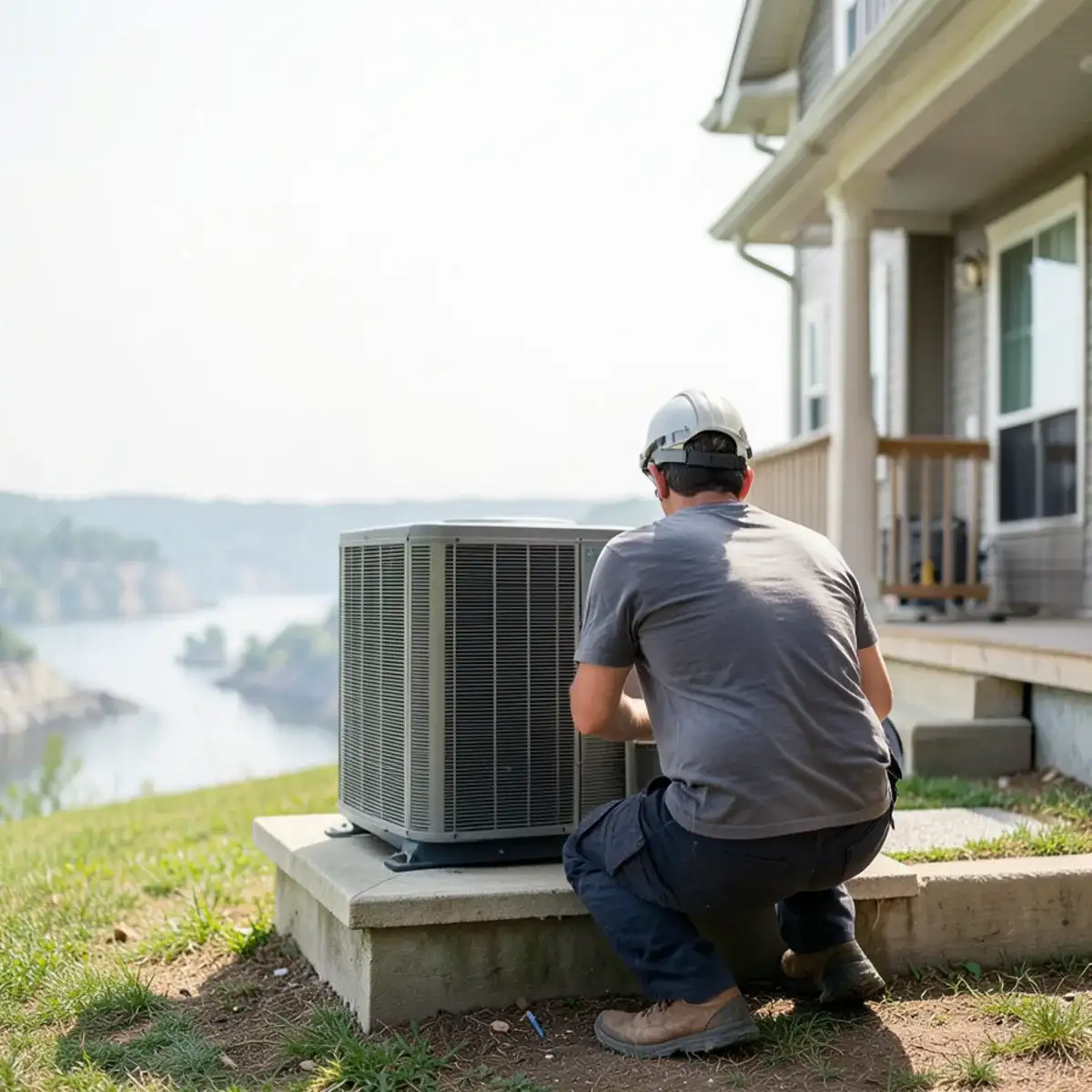
An AC blowing warm air usually comes down to one of seven causes, and you can rule out the first four yourself with no tools beyond a garden hose. The last three sit inside the outdoor unit and the refrigerant circuit, and those need a technician with a meter and gauges.
AC blowing warm air: the 7 causes, easiest to hardest
Work down the list in order. It runs from free fixes to the most expensive part in the system, so you stop spending the moment you find the answer.
| # | Cause | Who checks it | The clue |
|---|---|---|---|
| 1 | Thermostat setting | You | Warm air only between cooling cycles, or all the time on the wrong mode |
| 2 | Clogged filter, frozen coil | You | Weak airflow, ice on the indoor lines |
| 3 | Tripped breaker or disconnect | You | Indoor blower runs, outdoor unit is silent |
| 4 | Dirty outdoor coil | You | Unit runs, cooling fades on hot days |
| 5 | Failed capacitor or contactor | Technician | Outdoor unit hums or clicks but the fan will not spin |
| 6 | Refrigerant leak | Technician | Cooling faded over weeks, oily spots on the lines |
| 7 | Failed compressor | Technician | Fan runs, air stays warm, and the first six are ruled out |
Tell us what your system is doing
Our office is open Monday to Friday, 8 AM to 4 PM. Call and we will sort out the next step.
Four causes you can rule out yourself
Do these before you call. Each takes minutes, and telling us the results saves time on the phone.
1. The thermostat is on the wrong setting
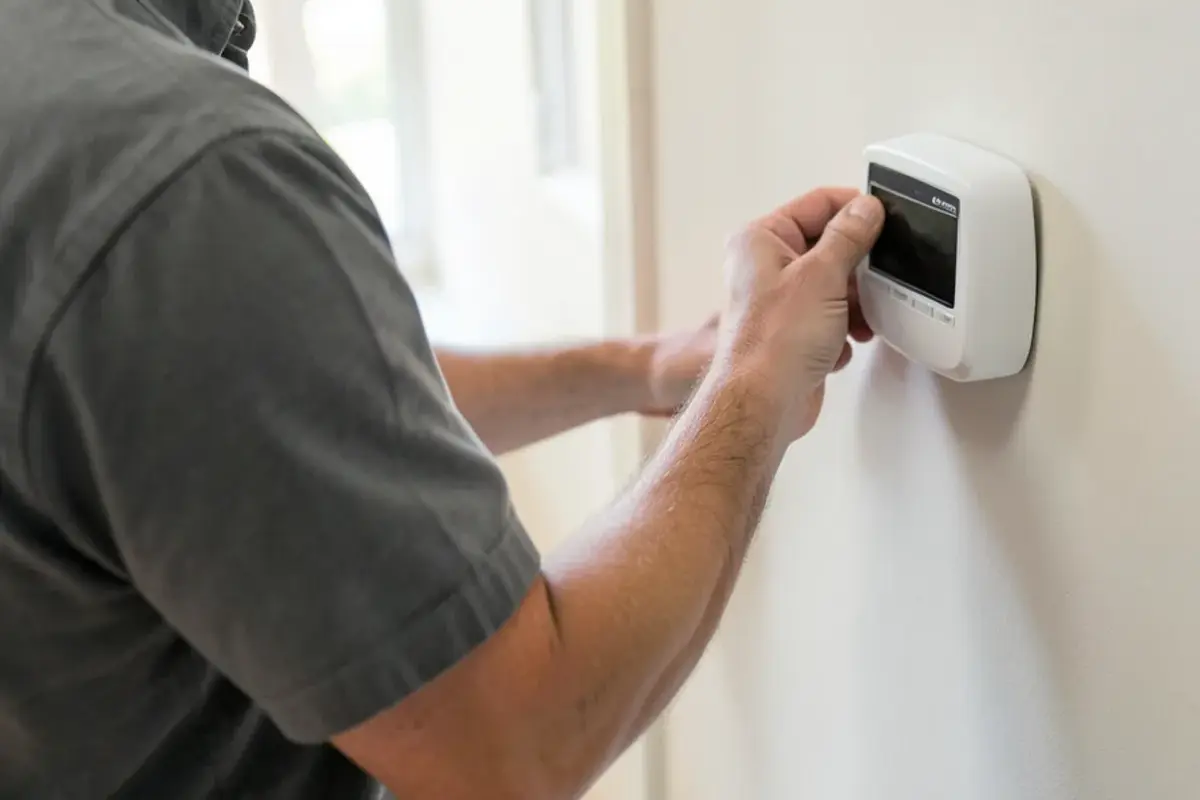
Confirm the mode is COOL, the setpoint sits below the room temperature and the fan reads AUTO. With the fan on ON, the blower keeps pushing air after the compressor stops, so you feel room-temperature air between cycles and it reads as warm. If the screen is blank, replace the batteries.
2. A clogged filter has frozen the indoor coil
A blocked filter starves the coil of warm return air, so it drops below freezing and ices over. Ice blocks airflow, and what little comes out of the vents is no longer cold. Pull the filter and look for frost on the copper lines at the indoor unit.
If you find ice, set the system to OFF with the fan on, and give it several hours to thaw before restarting. ENERGY STAR advises checking filters once a month, and airflow problems alone can cut efficiency by up to 15 percent. Our filter guide covers the schedule.
3. A breaker or disconnect cut power to the outdoor unit
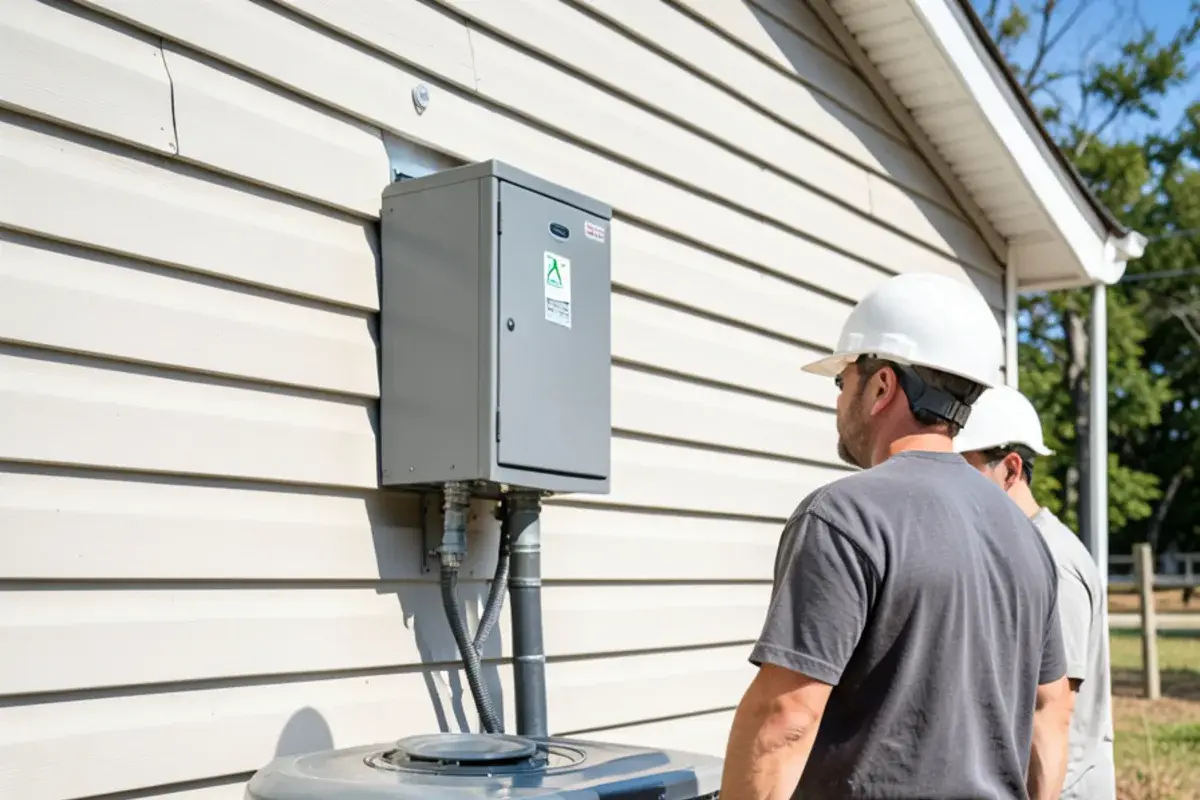
Central AC has two halves. If the indoor blower runs but the outdoor fan is silent, you are only moving house air around. Check the double breaker at the panel and the disconnect box on the wall outside. A tripped breaker gets one reset. A second trip means leave it off, since that points to an electrical fault that needs testing.
4. The outdoor coil is matted with debris
The outdoor coil is where the heat from your house leaves. Cover it and the system cannot shed that heat, so the air indoors stops feeling cold. ENERGY STAR says plainly that dirty coils reduce a system's ability to cool.
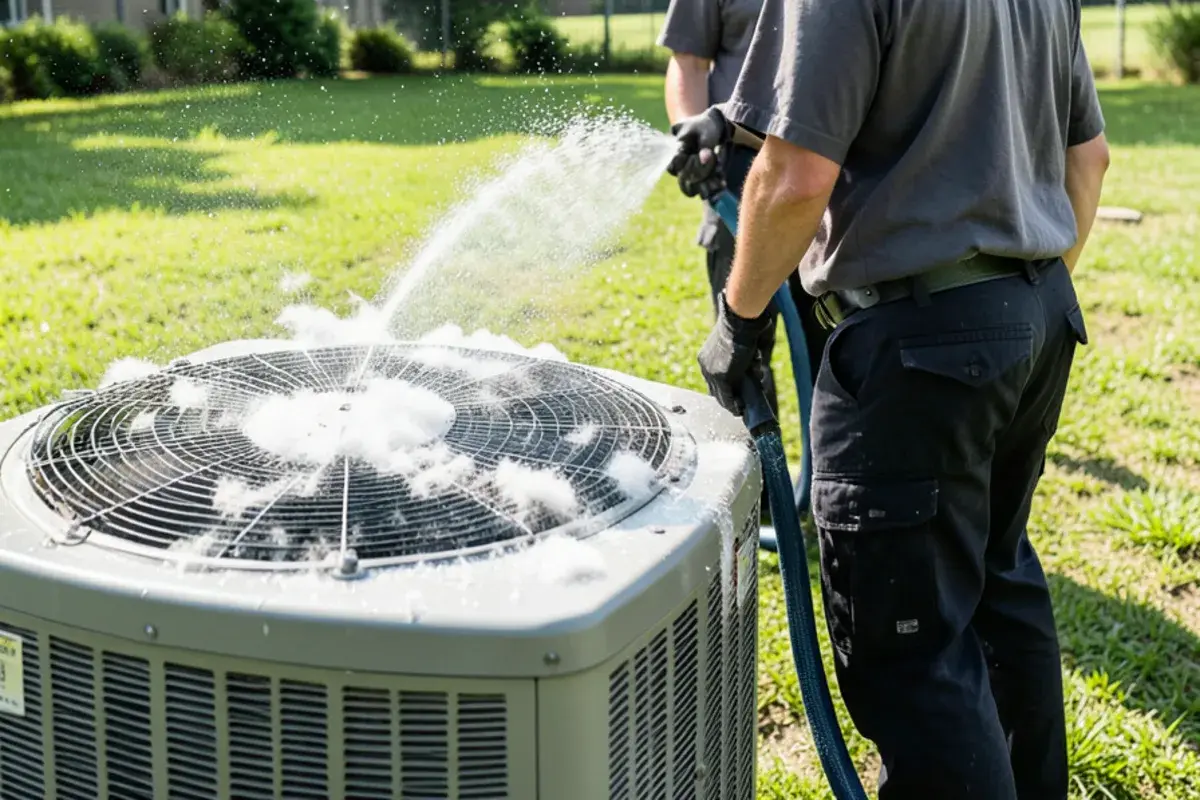
Shut the power off at the disconnect, then rinse from the outside with a garden hose. Skip the pressure washer, which folds the fins flat. Cottonwood is the usual culprit in the river bottoms, and that includes lots near Rhineland, directly across the river from Hermann. A condenser raised on a platform in a flood-aware rebuild collects fluff the same as one on a ground pad.
Three causes that need a technician
These sit behind panels that hold live voltage or under refrigerant pressure. Leave the cover on.
5. A capacitor or contactor has failed
The capacitor gives the compressor and fan motor their starting kick, and the contactor is the switch that sends them power. When either fails, the outdoor unit hums, clicks or sits still while the indoor blower carries on. Both are small repairs. A capacitor holds a charge after the power is off, so this is not a job for a screwdriver.
6. Refrigerant has leaked out
An AC circulates the same charge for its whole life, so a low reading means a hole somewhere. The clue is cooling that faded slowly over weeks, sometimes with an oily stain at a joint or a faint hiss.
Federal rules under Section 608 require certification for anyone servicing equipment that can release refrigerant. If your system is old enough to run R-22, the EPA says only recycled, reclaimed or previously produced supply can be used after 2020, so ask about price before you approve a recharge.
7. The compressor has failed
This is the last answer, not the first. The fan spins, the blower runs, the air stays warm and the electrical tests come back clean. Once a system reaches 15 years or so, compare a replacement air conditioner with the repair, because a new compressor in an old system is a large bet on the remaining parts.
Is the air really warm, or just not cold enough?
Measure it before you decide. Hold a kitchen thermometer at a return grille for a few minutes, then at the nearest supply vent. A healthy central AC usually lowers the air about 15 to 20°F across the coil. If yours is close to that range, the system may be working and simply losing the fight on a very hot, humid afternoon.
The pattern across the house also tells you something:
- One room or one floor is warm. Suspect a closed damper, a crushed run or a leaking duct, not the outdoor unit. Our guide to leaking ductwork shows what to look for.
- Every vent is warm. Go back to the seven causes above.
- It cools at night and fades by mid-afternoon. Look at the outdoor coil first, then ask about the charge. A marginal system often gives itself away at the hottest hour.
Write down both temperatures and the time. Those two numbers are worth more on the phone than "it isn't keeping up."
How urgent is warm air from the vents?
Warm air alone is a comfort problem, until the weather or a household member makes it more than that. Shut the system off and call if you hear humming with no start, see ice, smell burning or lose a breaker twice. On a 95°F day with an infant or an elderly person in the house, say so when you call, and move them to the coolest room or to a friend's house while you wait.
What we tell customers about warm vents
Do not pay for a refrigerant top-off with no leak search. It treats the symptom, and the next call will be for the same reason.
Before you call, note three things: whether the indoor blower runs, whether the outdoor fan spins and when the problem began. Then photograph the data plate on the outdoor unit. That gives us the age and refrigerant type before anyone opens a panel, and Angi's 2026 St. Louis labor figure is $125 to $150 an hour, so a shorter diagnosis matters. That is a benchmark, not our price.
For the repair itself, see our AC repair page. A spring AC tune-up is the cheaper way to meet a weak capacitor, in April rather than July.
Ran through the first four and still have warm air? Call (209) 563-1270 on a weekday, 8 to 4, with what you found. You will get a price for the fix before work begins.
Brian Grannemann
Owner, Brian Grannemann Services Inc, Hermann, MO. In business since 1998 across heating, cooling, electrical and plumbing work.