
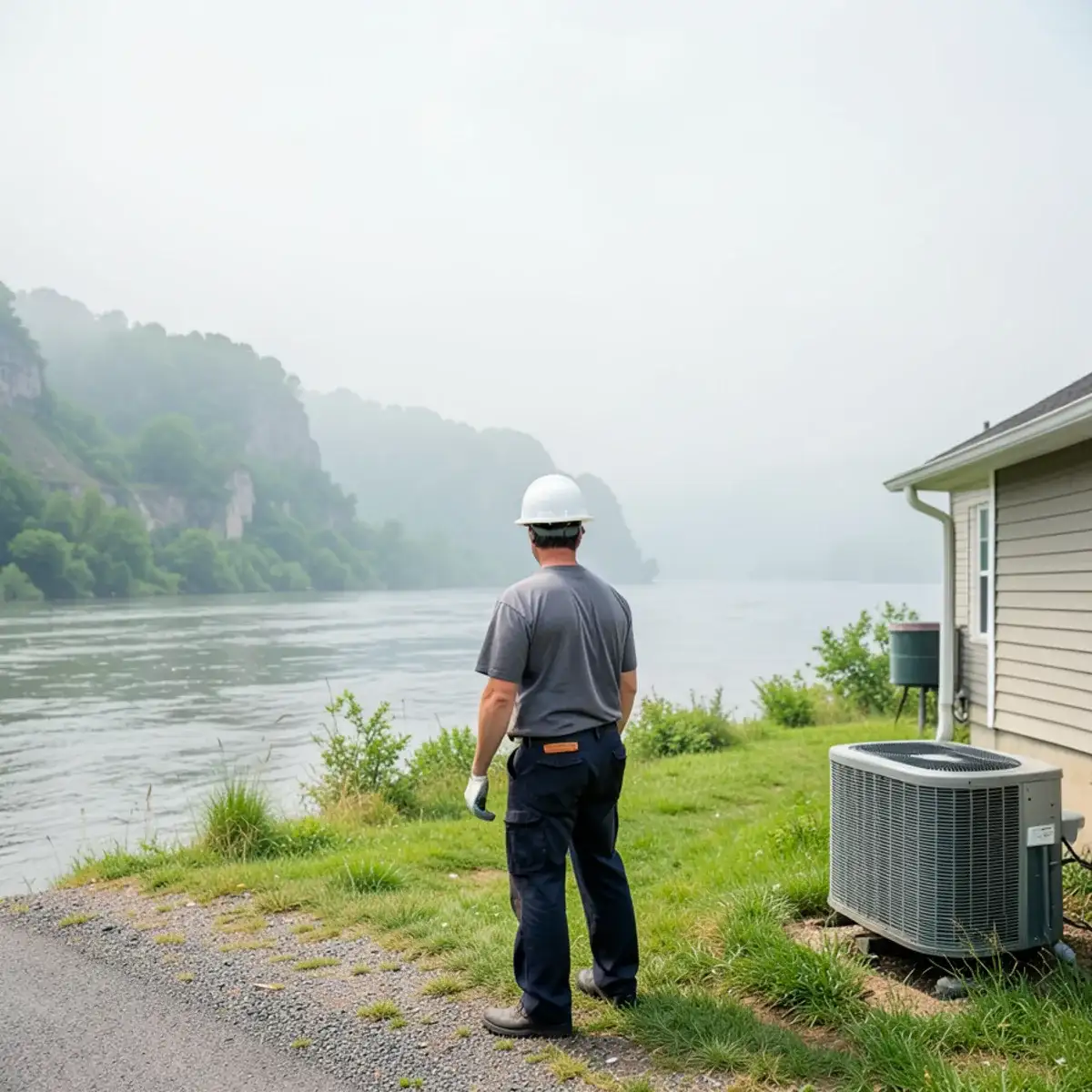
Missouri River humidity makes your AC do two jobs at once: cool the air and wring water out of it. If the house feels clammy at 74°F, the second job is failing, and the usual cause is an oversized unit whose short cycles leave the moisture behind. Check your indoor humidity first, then fix the cause.
Why Missouri River humidity is hard on an AC
Your air conditioner is a dehumidifier first. It removes moisture by running warm air across a cold coil. Water condenses on the coil, runs into the pan and leaves through the drain line. That only works while the coil is cold and wet, so it needs long, steady run times.
Hermann gets close to 28 days above 90°F in a typical year (BestPlaces), yet the miserable days around here are often not the hottest ones. A muggy 82°F morning with no breeze gives an AC very little sensible heat to remove, so it runs briefly while the moisture stays.

The National Weather Service uses dew point to describe how air feels, and that is a better number than relative humidity. It calls 55°F or lower dry and comfortable, 55 to 65 sticky, and 65 or higher oppressive. When your weather app shows a dew point in the 70s, the outdoor air is carrying a lot of water, and every leak in the house lets more of it in.
Tell us what your system is doing
Our office is open Monday to Friday, 8 AM to 4 PM. Call and we will sort out the next step.
How do you know humidity is the problem?
Measure it for a week before you spend anything. A hygrometer costs little, and the reading settles arguments about whether a house "feels" damp.

The EPA says to keep indoor humidity below 60 percent, ideally between 30 and 50. Compare your reading with these symptoms.
| What you notice | What it usually means |
|---|---|
| 74°F on the thermostat, but the air feels clammy | Short run times or moisture coming in from somewhere |
| AC runs a few minutes, then stops, even on hot days | Oversized system, or a thermostat in the wrong spot |
| Musty smell when the system starts | Wet coil, wet ducts or a damp crawl space |
| Windows or duct boots sweating | Cold surfaces meeting humid air |
| Upstairs dry, basement damp | Ground moisture and a basement the AC barely serves |
| Runs all day, house still humid | Low charge, dirty coil, leaky ducts or a failing system |
Why does an oversized AC leave a river-valley house clammy?
An oversized AC satisfies the thermostat before it has run long enough to remove the moisture. The air reaches 74°F in ten minutes, the compressor stops and the water stays in the room. Many homes got larger equipment than they need at some point, on a simple square-foot guess.
ACCA Manual S addresses this directly: it keeps cooling equipment within 15 percent over the Manual J load. So if a salesperson offers to go up a size "to be safe" on a humid site, ask to see the load calculation. In this climate, the extra capacity makes the house feel worse.
Airflow matters too. A blower running too fast leaves the coil warmer and strips less water. Some systems have a dehumidify setting that slows the blower, and a contractor can check whether yours is set for humid weather.
Five sources of moisture to check before you blame the AC
The AC can only remove what it can keep up with. Bottom land near the river, like the fields around Rhineland, sits close to a lot of moisture, so start at the bottom of the house and work up.
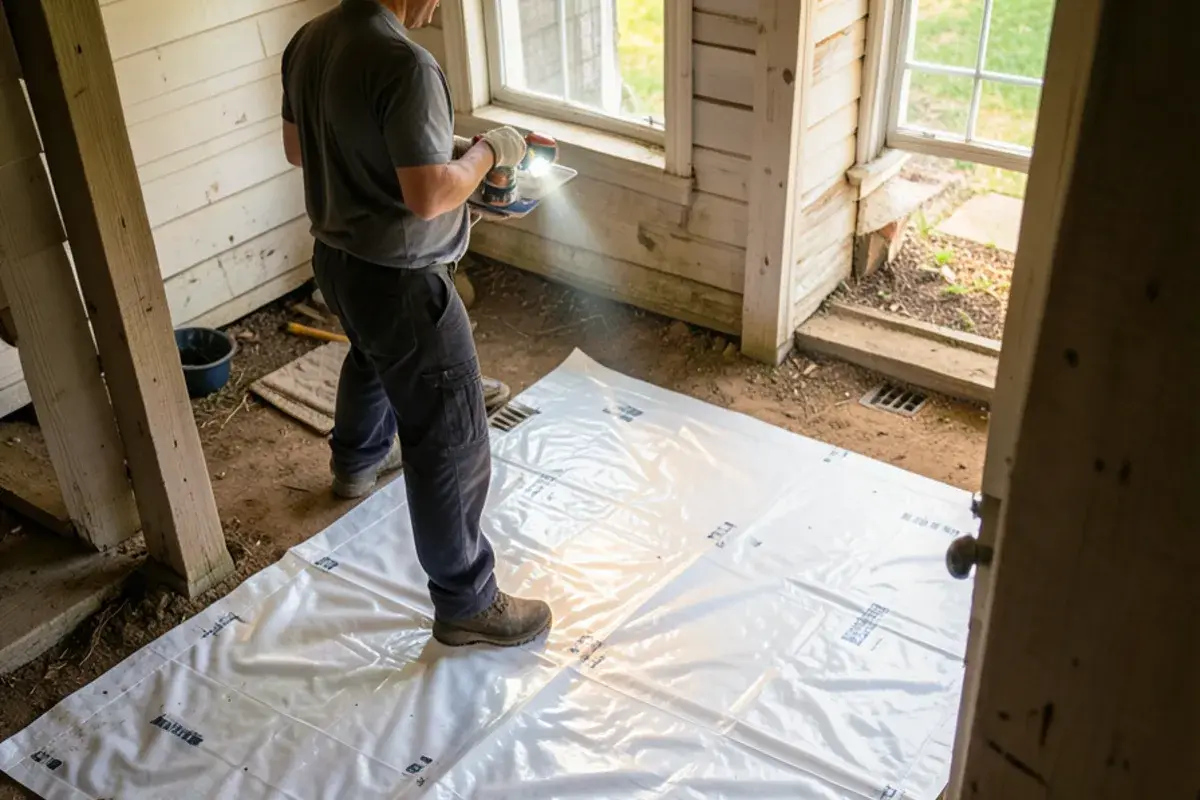
- Crawl space ground. Bare dirt gives off moisture all summer. Cover it with a heavy vapor barrier.
- Leaky return ducts. A return leak in a crawl space pulls damp air straight into the system. Duct repair stops that at the source. ENERGY STAR says duct sealing can improve efficiency by up to 20 percent.
- Downspouts and grading. Water sitting against a foundation ends up inside. Extend downspouts and fix low spots.
- Fans. Bath and kitchen fans should vent outdoors, and clothes dryers must.
- Thermostat fan setting. Keep it on AUTO, so the wet coil can drain between cycles.
Why are mild, muggy days the hardest on comfort?
A 90°F afternoon keeps the AC running, so it removes water the whole time. A 74°F rainy day in June is the harder case. The house barely needs cooling, so the thermostat rarely calls, and damp air sits inside with nothing wringing it out. That is often when a river-valley house feels worst, and it is why a reading of 74°F tells you little.
Three habits help on those days.
- Do not open the windows for "fresh air" when the dew point is high. Cool, wet air feels pleasant coming in, then it soaks into carpets, furniture and the basement.
- Do not set the thermostat far up during the day. A big setback can leave moisture to build for hours, and the AC then has to pull it all back out.
- Run the bath fan through a shower and for a while after. On a mild day, the AC will not run enough to take that moisture out for you.
If your thermostat has a dehumidify setting, it can run the AC longer at a lower blower speed on these days. Sizing a basement dehumidifier is just as simple: match it to the damp area, and give it a hose to a drain so a full bucket does not shut it off in the middle of a wet week. Set it near 50 percent and check the reading with your hygrometer.
What fixes it, from cheapest to largest
Work up this list in order. Most houses stop at one of the first three steps.
| Fix | When it fits | Relative cost |
|---|---|---|
| Clean filter, clean coils, confirm the charge | System has not been serviced in a year or more | Low |
| Blower speed and dehumidify setting | Blower set high, equipment has the option | Low |
| Portable dehumidifier in the basement | Damp basement, comfortable upstairs | Low to moderate |
| Seal ducts, cover the crawl space | Musty smell, damp under the house | Moderate |
| Whole-home dehumidifier | House stays over 55 percent with a healthy AC | Moderate to high |
| Correctly sized or variable-speed system | Short cycling on an old, oversized unit | High |
ENERGY STAR recommends whole-home units for relatively well-sealed homes that consistently read above 55 percent, and says a professional should size them. For a portable unit in a damp space, it suggests 20 to 30 pints a day for slightly damp conditions and up to 50 for wet ones. If the basement runs below 65°F, look for a low-temperature model or an anti-frost sensor.
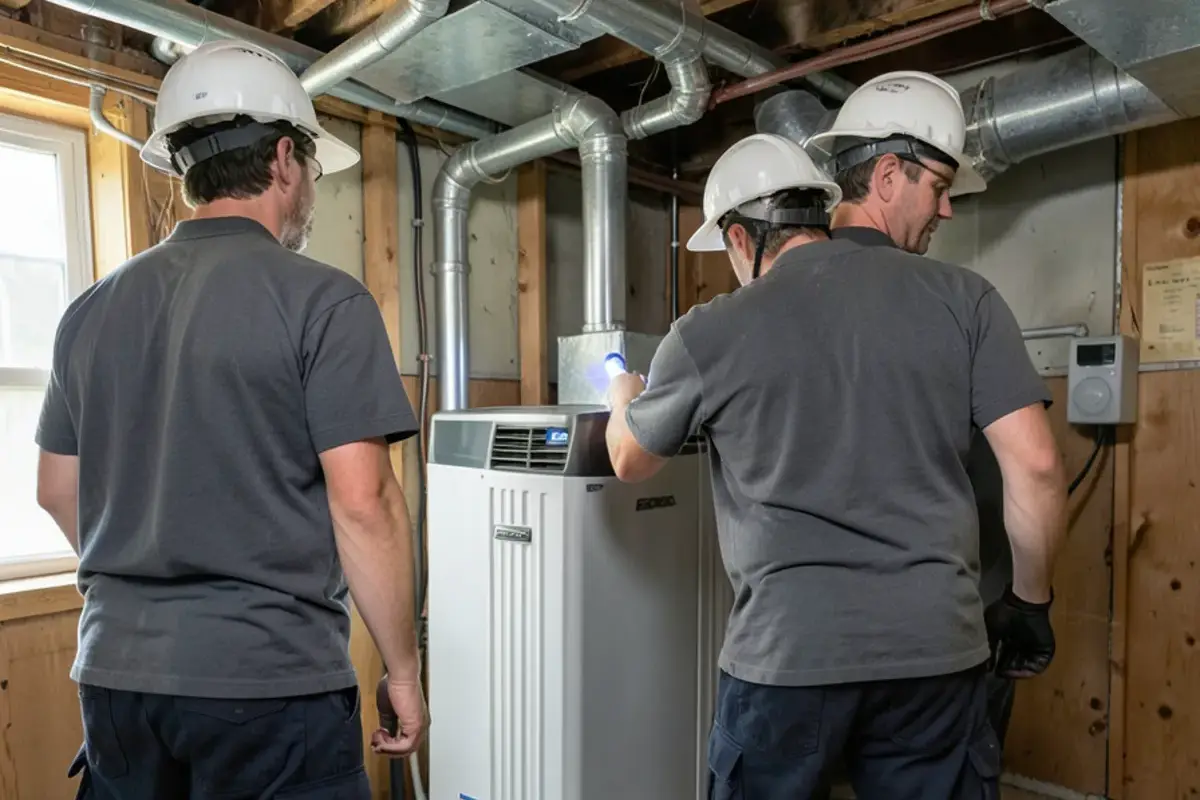
If the system is old and short cycles, an AC replacement sized from a Manual J load may solve both problems. Do not replace it until you have ruled out the leaks above, or the new unit will inherit them.
What we tell customers about muggy houses
Buy the hygrometer first. Then tell us the reading, how long the AC runs each cycle and where the house smells musty. Those three facts point to the cause faster than the word "humid" ever will.
If the AC is doing something odd rather than simply losing the battle, our AC repair page lists the failures we test for. We also cover towns away from the river, including Sullivan, which is about 66 minutes from Hermann, so call first to confirm scheduling. Clammy on a mild day and tired of guessing? Call (209) 563-1270.
Brian Grannemann
Owner, Brian Grannemann Services Inc, Hermann, MO. In business since 1998 across heating, cooling, electrical and plumbing work.