
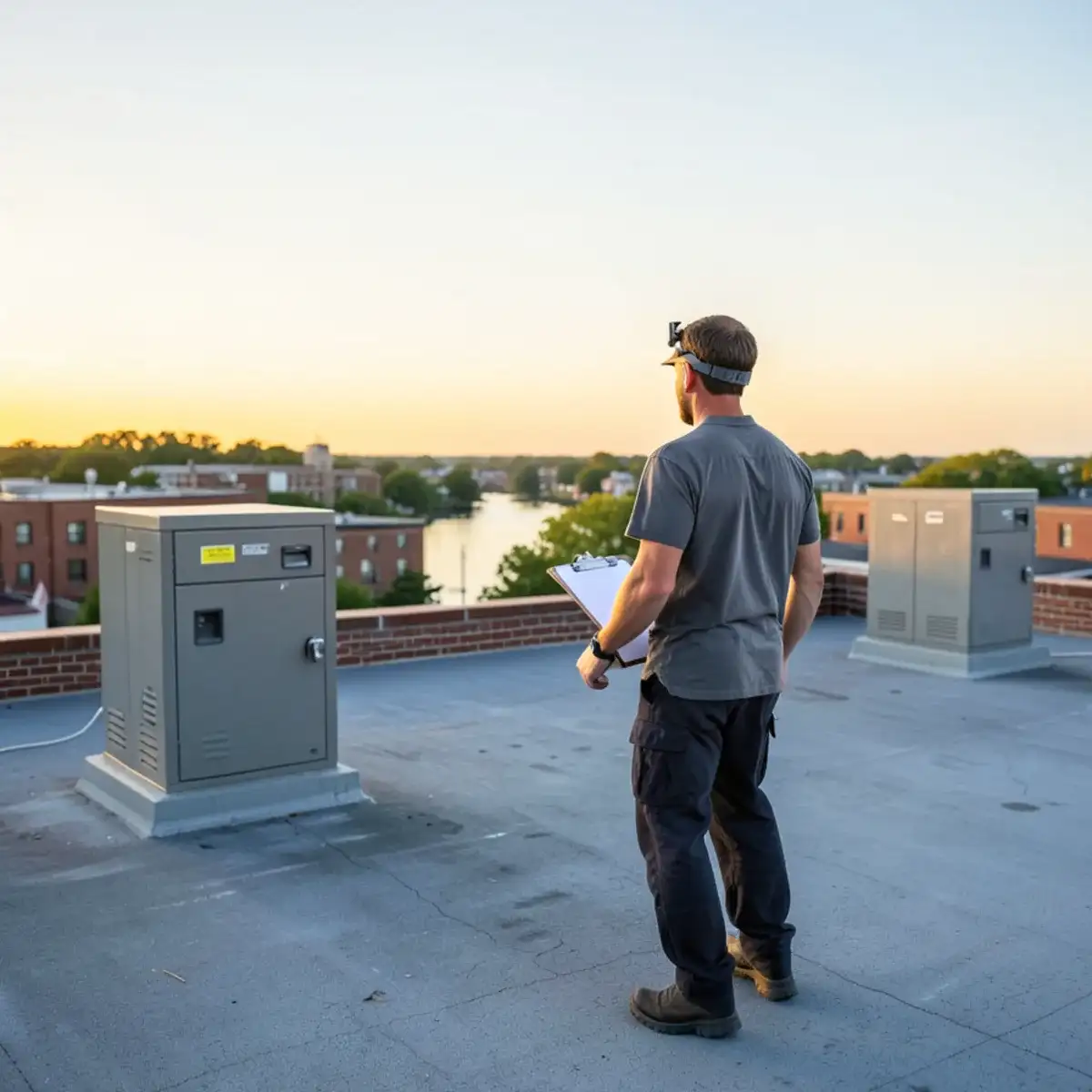
A commercial HVAC maintenance checklist protects you from three bills: emergency repairs in peak season, tenant complaints and missing records when a refrigerant, insurance or warranty question comes up. Use the intervals below as a starting point, assign each line to a person, and keep the paperwork for every unit.
Start with an equipment list, not a schedule
You cannot maintain what nobody has written down. Before you set any intervals, build one sheet per building with a line for each unit.
| Record for each unit | Why you need it |
|---|---|
| Location and tenant space served | Speeds every service call |
| Make, model and serial from the data plate | Sets age, parts and refrigerant |
| Refrigerant type and full charge in pounds | Decides which federal rules apply |
| Filter size and count | Lets anyone order or bring the right ones |
| Install date and last major repair | Feeds your capital plan |
| Who pays under the lease | Prevents a dispute at the worst moment |
On a building you just took over, this walk can turn up surprises, such as a unit nobody listed or a split system a tenant added. Do it once and keep it current.
Tell us what your system is doing
Our office is open Monday to Friday, 8 AM to 4 PM. Call and we will sort out the next step.
Commercial HVAC maintenance checklist: monthly
Treat these as walk-through items. A site manager or porter can do most of them with no tools, and they do not replace a technician.
- Check thermostat schedules against actual building hours and holidays.
- Inspect filters on high-traffic units, and swap any that are loaded.
- Walk the space for hot or cold complaints, odors and ceiling stains.
- Look at condensate drains in the cooling season for slow flow.
- Listen at the units for new noise or vibration.
- Log every tenant comfort call, with date, space and outcome.
Patterns in that last item are valuable. Three calls from one suite in a month often point to a unit problem, not a fussy tenant.
Quarterly tasks
Assign these to your service contractor or a trained in-house tech. Roof access rules and fall protection apply, so keep casual visitors off the roof.
- Change filters on the rest of the units, and record size and date.
- Inspect belts for cracks and tension, and check pulley alignment.
- Clean condensate pans and traps, and confirm the pans drain.
- Check roof curbs, access panels and gaskets for leaks and missing screws.
- Clear debris from around rooftop units and roof drains.
- Check economizer dampers for movement and correct position.
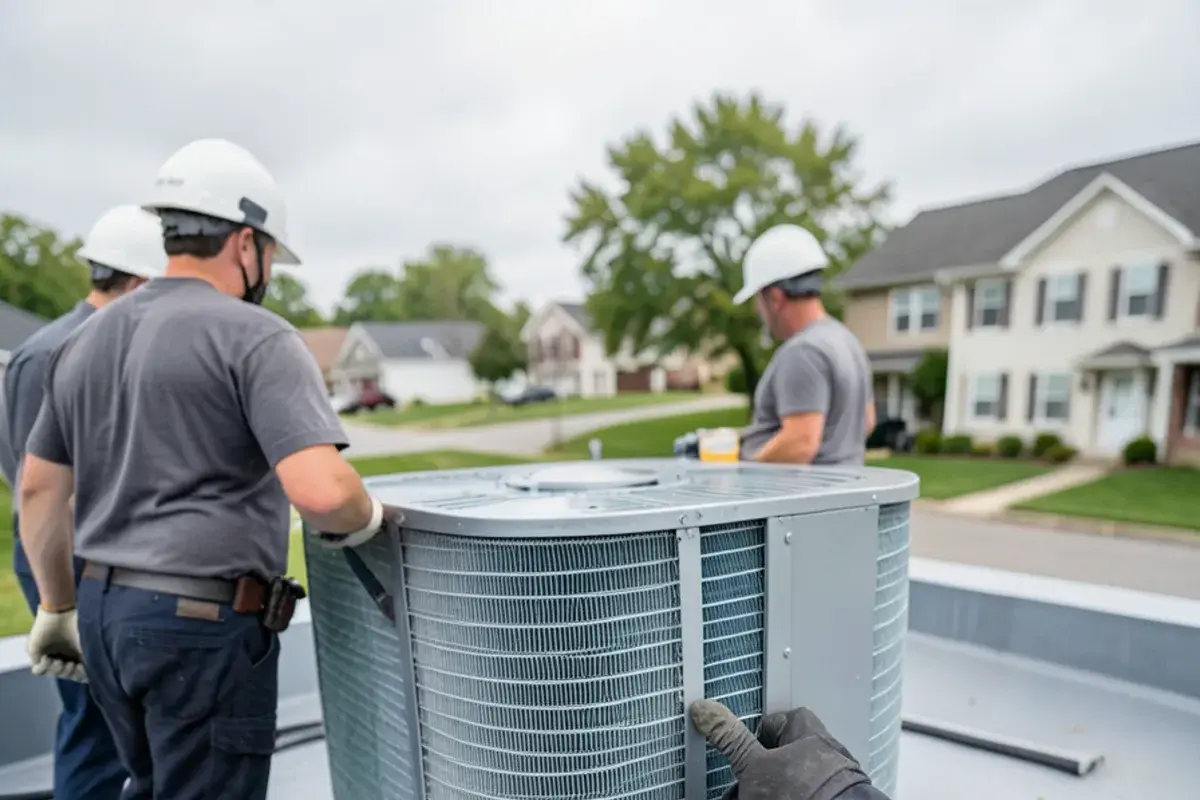
Seasonal tasks: spring and fall
Plan one full pre-season visit for each mode. ENERGY STAR's checklist follows that same pattern for equipment generally, and the list below adapts it to commercial units.
Spring, before cooling
- Clean condenser coils and straighten bent fins.
- Read refrigerant pressures and temperatures, and record them.
- Measure voltage and current on the compressors and fan motors.
- Test capacitors and contactors.
- Clear and test condensate lines, plus any overflow switches.
Fall, before heating
- Inspect the heat exchanger and burners on gas units.
- Check gas pressure, combustion and flue venting.
- Test safeties, limit switches and igniters.
- Confirm freeze protection and low ambient settings.
- Test CO alarms where gas equipment serves occupied space.
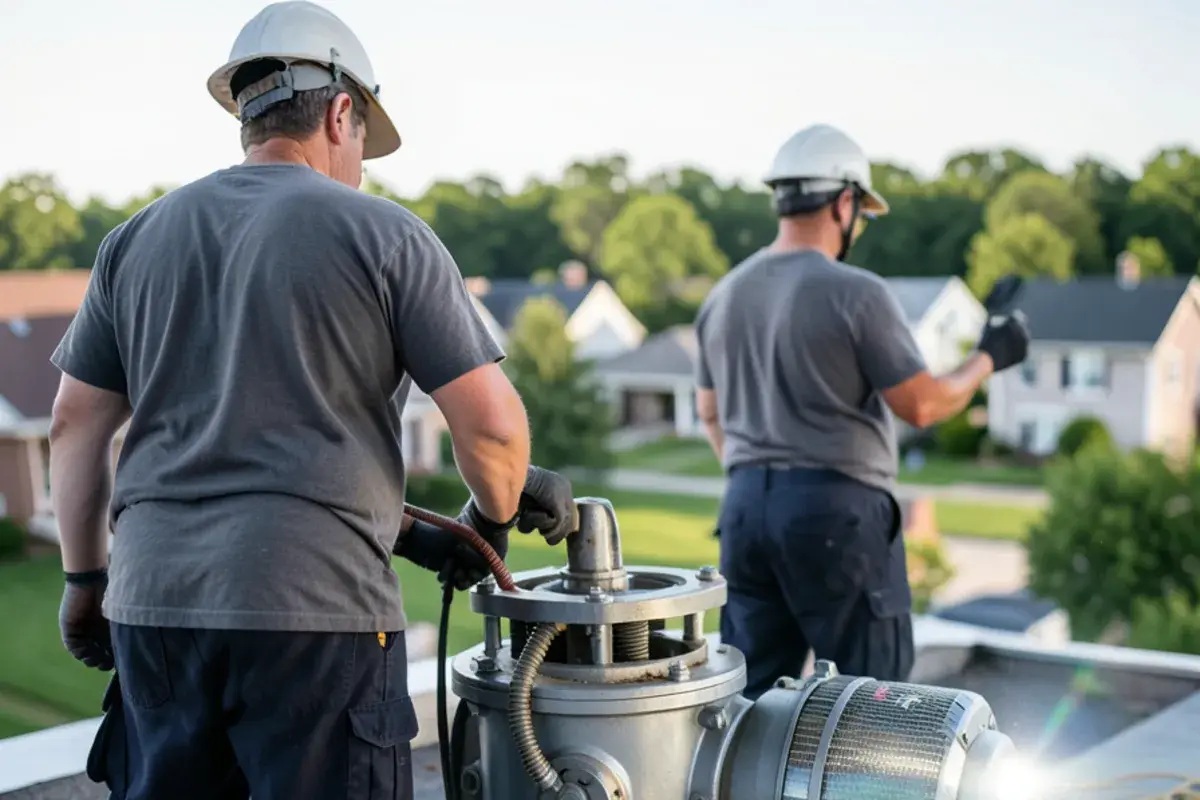
Annual tasks
Set aside one day a year for the building as a system, not just the equipment.
- Clean evaporator coils and blower wheels.
- Test the full control sequence, including economizer changeover.
- Check outdoor air settings against occupancy.
- Reconcile the equipment list against what is on site.
- Review run hours, repair spend and tenant calls, unit by unit.
- Update the capital plan with anything likely to need replacing in three years.
What records protect you?
Keep records that answer three questions: what was done, by whom, and what it found. That paper matters if you sell, refinance, make an insurance claim or face a refrigerant question.
| Record | Keep |
|---|---|
| Service tickets with readings | Life of the unit |
| Refrigerant added or recovered, in pounds | Life of the unit. Three years is the floor where 40 CFR 84.106 applies |
| Technician name and EPA Section 608 card copy | With the vendor file |
| Filter change log | One year rolling |
| Warranty and registration papers | Until the term ends |
| Permits and inspection sign-offs | Life of the building |
The federal rules depend on the refrigerant and the charge. EPA's page on leak repair covers appliances with 50 pounds or more of ozone-depleting refrigerant, with a 10 percent trigger leak rate for comfort cooling. A separate rule at 40 CFR 84.106, effective January 1, 2026, reaches HFC appliances with 15 or more pounds and requires service records for at least three years, while excluding the residential and light commercial subsector. Many small rooftop units may fall outside both, but do not assume so. Get an answer for each unit, since a chiller or a large system is a different case.
Anyone who handles the refrigerant must hold EPA Section 608 certification. Ask for the card and keep a copy.
What does a tenant turnover add to the list?
Every vacancy is the cheapest chance you get to look at a unit. Nobody is working in the space, and you can run the system without a complaint.
- Replace the filter and write the date on the frame.
- Run heating and cooling for a full cycle each, whatever the season allows.
- Check that the thermostat works and that any lock or schedule was cleared.
- Look for space heaters, blocked returns or furniture marks over registers.
- Record any tenant changes, such as a new wall or a closed-off return.
- Give the next tenant one page on filters, who to call and what to report.
Tenant build-outs deserve a second look. A new wall can cut a room off from its return, and a suite with more people or more equipment may need more air than the unit was set for.
How do you turn the list into a replacement budget?
Use your equipment list to see which year each unit is likely to need money. For each one, take the install year, add a planning life and flag anything inside three years. A tight budget works better with a date on it than with a surprise in July.
Spreading a cost is simple arithmetic. If a rooftop unit is expected to cost $12,000 to replace in six years, that is $2,000 a year, or about $167 a month, held in reserve. The $12,000 is only a round figure for the example, so swap in your own quote. Repeat for each unit and you have a line for the owner's budget, with the records to back it up.
What to put in a service agreement
A vague agreement costs you when something breaks. Ask any vendor, including us, to spell out:
- The units covered, listed by model and location.
- The tasks per visit, and the readings they will record.
- What is included and what is billed separately, such as filters, belts and refrigerant.
- How to reach them after office hours, and what they do and do not commit to.
- Who holds the records, and how you get a copy.
We will be direct about ours. Staff answer at the office during weekday hours, 8 AM to 4 PM, so we plan commercial HVAC maintenance around your building's hours rather than promising a response time. Ask us for a clear, upfront quote against your unit list.
What we tell property managers
Start small, finish the list and do not skip a season. A half-kept schedule produces no records and no savings. Pick the units that would hurt most if they failed, such as a restaurant kitchen or a ground-floor retailer, and start there.
If you manage buildings in New Haven or Washington, start your list on the roof. Our rooftop unit service page explains the work, and our commercial repair page covers what happens when one fails. Send your equipment list or call (209) 563-1270, and we will go through it with you.
Brian Grannemann
Owner, Brian Grannemann Services Inc, Hermann, MO. In business since 1998 across heating, cooling, electrical and plumbing work.