
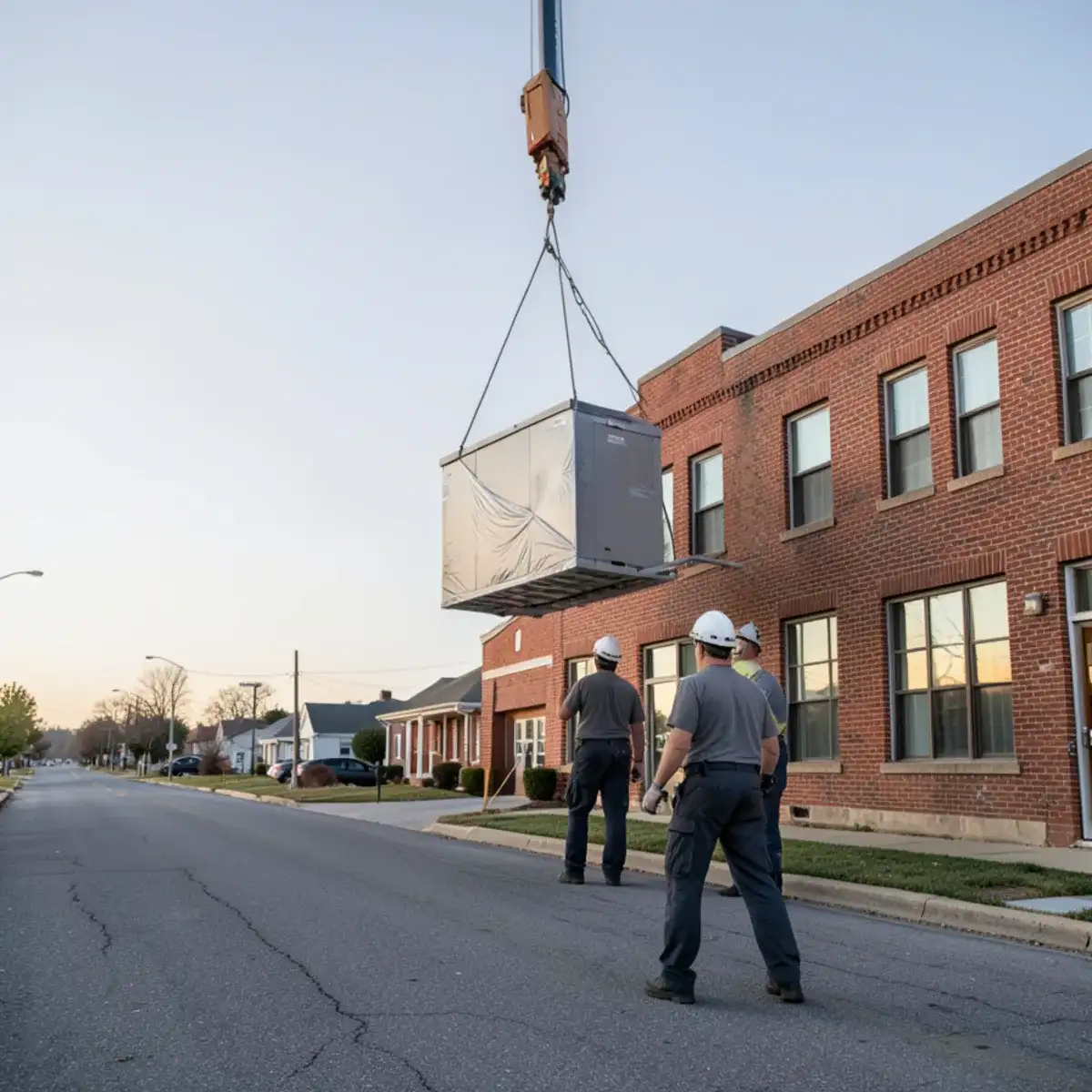
Plan a rooftop unit replacement a year out, while the old unit still runs, and you control the price, the season and the disruption to tenants. Wait for it to fail in July and you take whatever is available. Most of the risk sits in the curb, the crane, the electrical supply and the permit, not the unit.
Should you replace now, or keep repairing?
Replace on your schedule when the unit's cost trend, age and roof timing all point the same way. Age alone does not decide it. The National Park Service says most mechanical systems need upgrading or replacing within 15 to 30 years, and rooftop units live a hard life at the short end of any range: full sun, wind, ice and no shelter.
Score each unit with these questions. The more you answer yes, the more a planned replacement deserves a real number.
- Has repair spend over the last 24 months approached a large share of a new unit's price?
- Does it still run on R-22, which ended production in 2020 and now relies on reclaimed supply?
- Has the same compressor, heat exchanger or coil failed or been patched more than once?
- Are tenants complaining about comfort even when the unit is working?
- Is the roof under it due for replacement within about five years?
- Would a failure in July or January stop a tenant from operating?
Compare efficiency before you decide. Federal rules set a minimum for air-cooled commercial units made since January 1, 2023: IEER 14.8 for units from 65,000 to under 135,000 Btu/h, and 14.2 from 135,000 to under 240,000 Btu/h, with electric or no heat (10 CFR 431.97). Your old unit's rating may be far below that, and the gap is the source of your operating savings. Ask for a calculation based on your own run hours.
Tell us what your system is doing
Our office is open Monday to Friday, 8 AM to 4 PM. Call and we will sort out the next step.
The rooftop unit replacement timeline
Work backward from a mild-weather date. Spring and fall give you room to be without cooling or heat for a day.
| Time before the swap | What the owner should do |
|---|---|
| 12 months | List units, read data plates, pull repair history, align with the roof plan |
| 9 months | Get a load review, since tenants and use may have changed |
| 6 months | Walk the roof with the contractor, check curb, structure and electrical |
| 4 months | Collect written quotes on the same scope |
| 3 months | Pick equipment, confirm lead time, submit for permits |
| 6 to 8 weeks | Book crane and any street closure, notify tenants |
| 2 weeks | Confirm unit delivery, staging spot and temporary cooling or heat |
| Day of | Crane lift, connect, start up, test |
| 2 weeks after | Final inspection, balance report, records filed |
Lead times change, so ask for one in writing before you commit to a date.
What gets checked on the roof
The unit is the easy part. Most surprises come from what it sits on and connects to.
Sizing. Do not assume the old tonnage was right. A tenant change from retail to office, or new lighting, shifts the load. Ask for a load calculation rather than a nameplate match.
Curb. A new unit rarely shares the old footprint. A curb adapter solves that, but it has to match the duct openings without choking airflow, and it raises the unit. Check for rot under the curb and for roof flashing that will not survive the lift.
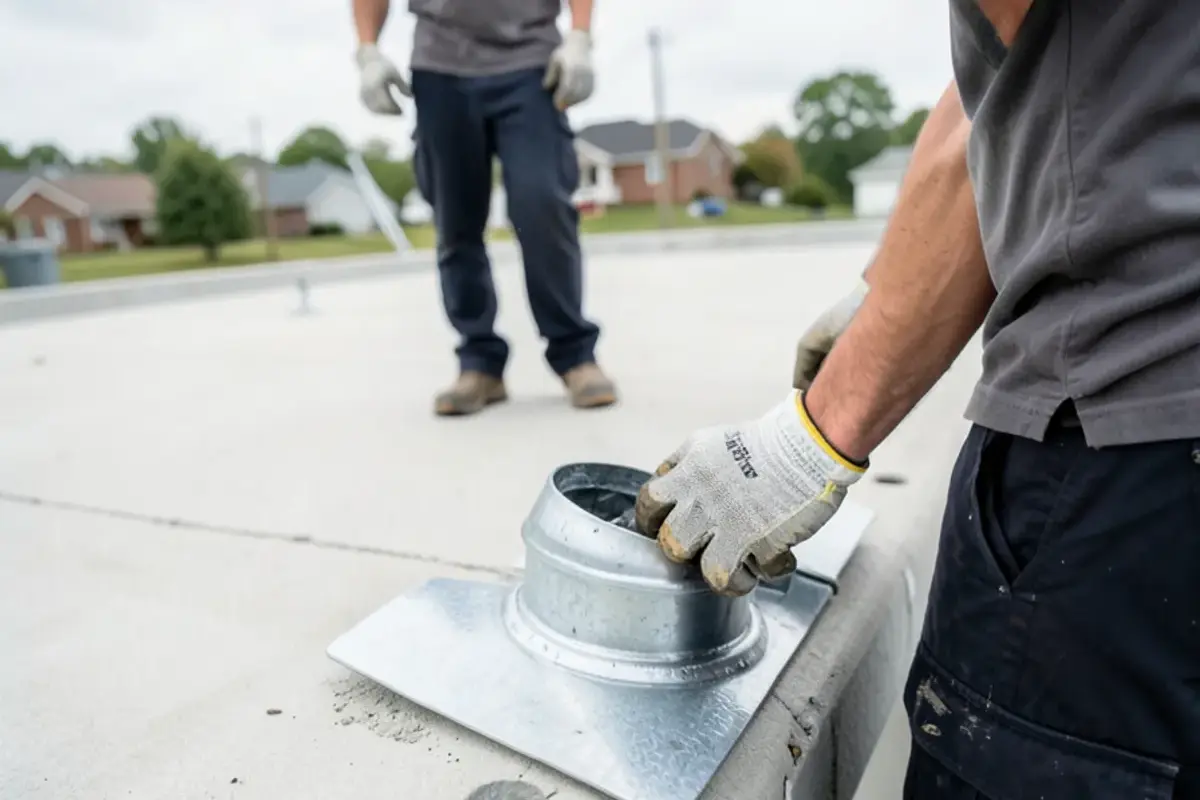
Structure. New equipment can weigh more or less than old, and an adapter adds to the total. On an older building, ask whether a structural engineer should review it. The Park Service warns against overloading historic structures with new equipment, and that caution applies to any old roof.
Electrical. Confirm voltage, phase and breaker size before ordering. A mismatch here can hold up the whole job.
Gas and condensate. Confirm that the gas supply can handle the new input and that the drain still has a trap and a clear path.
Controls. Ask whether the existing thermostat or building controls work with the new unit. Economizer settings need to be commissioned, not left at factory defaults.
Refrigerant. Ask which refrigerant the new unit uses and whether your service vendor is set up for it. Old refrigerant must be recovered, and EPA requires Section 608 certification for anyone handling it.
What changes the price
We are not printing a dollar figure here. We could not find a current, reliable regional range for rooftop replacement, and a number without your curb, crane and electrical facts would mislead you. Here is what moves the quote.
- Tonnage, heat type and efficiency tier of the new unit
- Curb adapter or new curb
- Crane size, reach and street closure
- Electrical, gas and duct changes
- Roof repairs and flashing
- After-hours or weekend labor to protect a tenant
- Disposal and refrigerant recovery
To compare quotes fairly, require each bidder to list all of those. A low number that leaves out the crane is not a low number.
Talk to your tax adviser early. IRS Publication 946 lists roofs and HVAC property among improvements to nonresidential real property that can qualify as section 179 property, with limits that change by year. Timing a replacement around a roof job or a tax year may matter more than a small price difference.
How do you keep a business open during the swap?
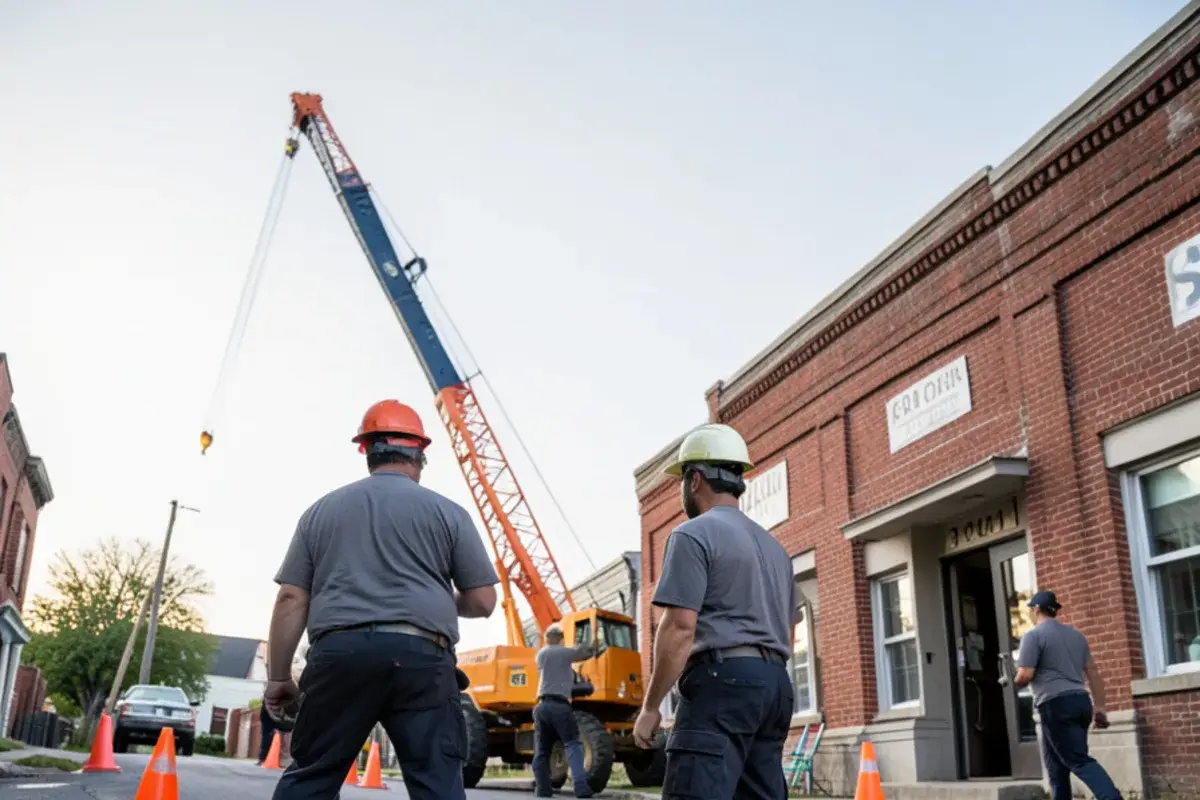
Plan the lift for the hours the business is closed, then back that plan up.
- Give tenants written notice with the date, the hours and a rain date.
- Stage the crane early, before customers and street traffic arrive.
- Keep people out from under the lift path, including the sidewalk and rear lot.
- Shut down rooftop intakes nearby, so that crane exhaust and roof dust stay out.
- Have temporary cooling or heat ready for a job that runs long.
- Protect interior ceilings and stock under the curb, since old curbs drop debris.
Restaurants, clinics and server rooms need more attention, because losing one unit may mean closing. Ask for a backup plan in writing.
What should you have in hand when the job is done?
A rooftop swap is not finished when the crane leaves. Ask for a closeout packet, and do not make the final payment until you have it.
- The start-up sheet, showing voltage, current, gas pressure and refrigerant readings.
- The refrigerant type and charge, for your equipment list.
- The airflow balance report, if the job called for one.
- The permit sign-off, with the inspector's date.
- The model and serial numbers, plus the warranty registration.
- The filter size and count, and the belt size if the unit uses one.
- Photos of the curb, flashing and connections before they were closed up.
Ask your roofer to look at the curb work too. A penetration or flashing changed during the swap can affect a roof warranty, and it is far easier to settle that in the first month than after the first leak.
What we tell building owners
Replace the worst unit on your terms before it replaces itself on its terms. If you own several, stagger them over a few years so that the capital spend and the crane mobilizations stay manageable.
Bring us the data plates and the repair history, and we will walk the roof, then give you a clear, upfront quote with the scope in writing. Our rooftop unit service page covers repair and replacement, and regular commercial maintenance will show you which unit is really next.
We work from Hermann, so plan for travel time. Bland is about 43 minutes away and Owensville about 33. Call (209) 563-1270 before the unit makes the decision for you.
Brian Grannemann
Owner, Brian Grannemann Services Inc, Hermann, MO. In business since 1998 across heating, cooling, electrical and plumbing work.