
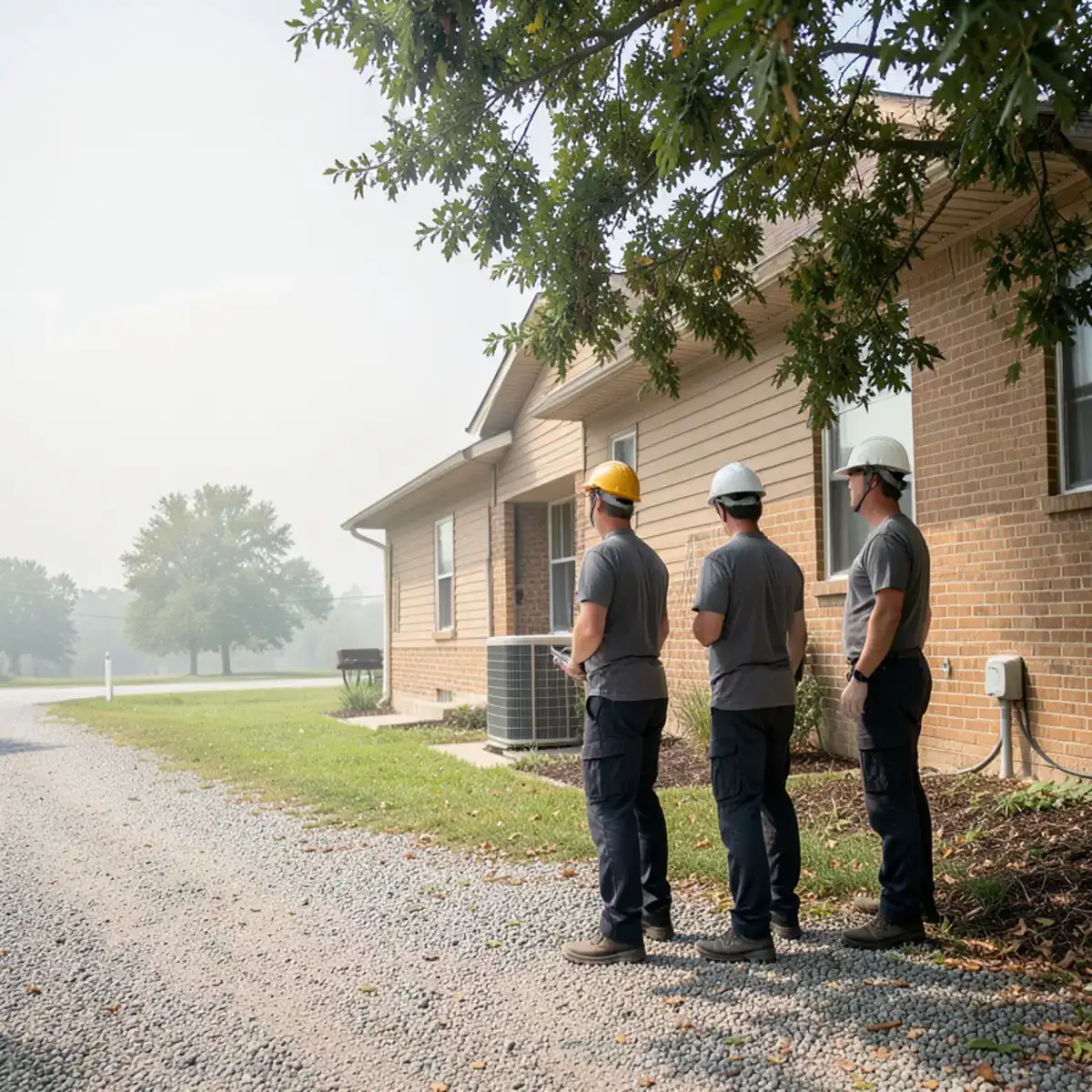
AC stopped working? What to do first is turn the cooling off at the thermostat, run four quick checks and decide who in the house should not sit through the heat. In a heat wave the people come before the equipment, so this guide runs by the clock: the first ten minutes, the first hour and the first night.
The first ten minutes: four checks that take no tools
Set the thermostat to off, then work through this list in order. Some no-cooling problems end right here, and none of these checks asks you to open the outdoor unit.
| Check | What to look for | If you find it |
|---|---|---|
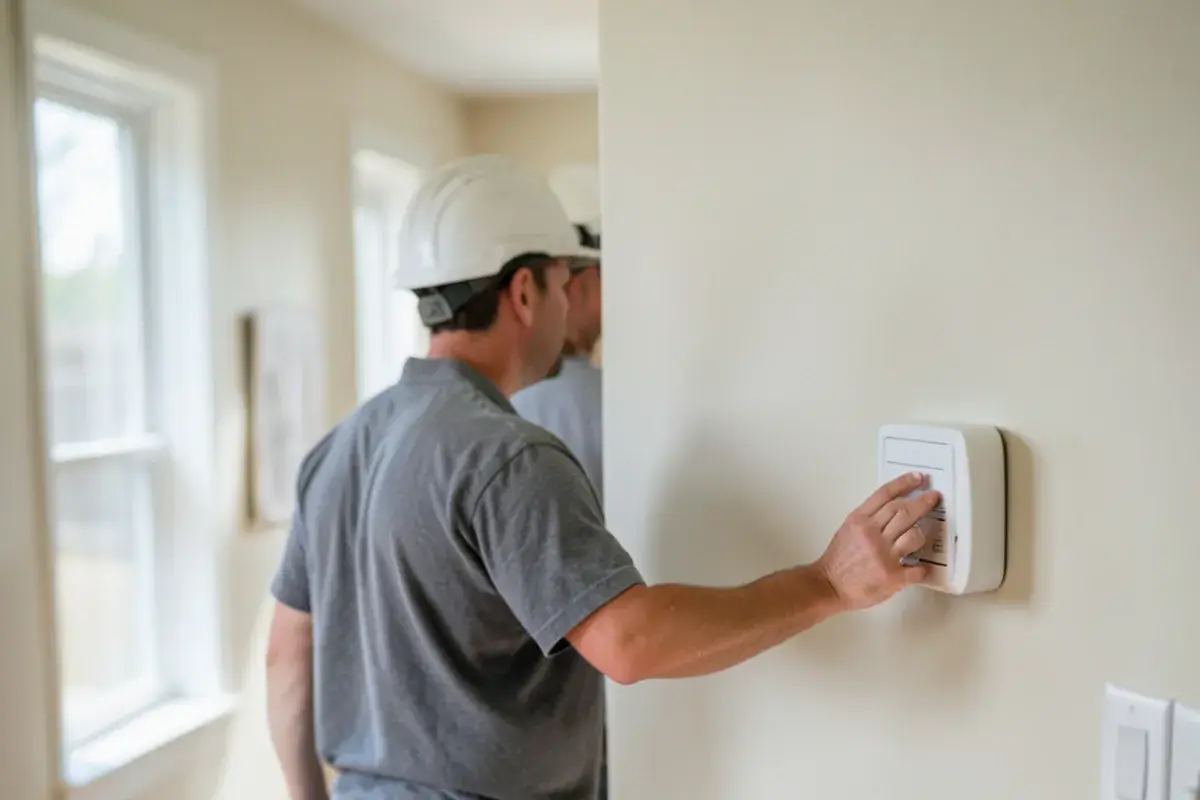
| Thermostat | Mode on cool, setting below room temperature, screen not blank | Fix the setting or replace the batteries, then wait five minutes |
| Filter | Gray mat, no light through it | Replace it, because a choked filter can freeze the coil |
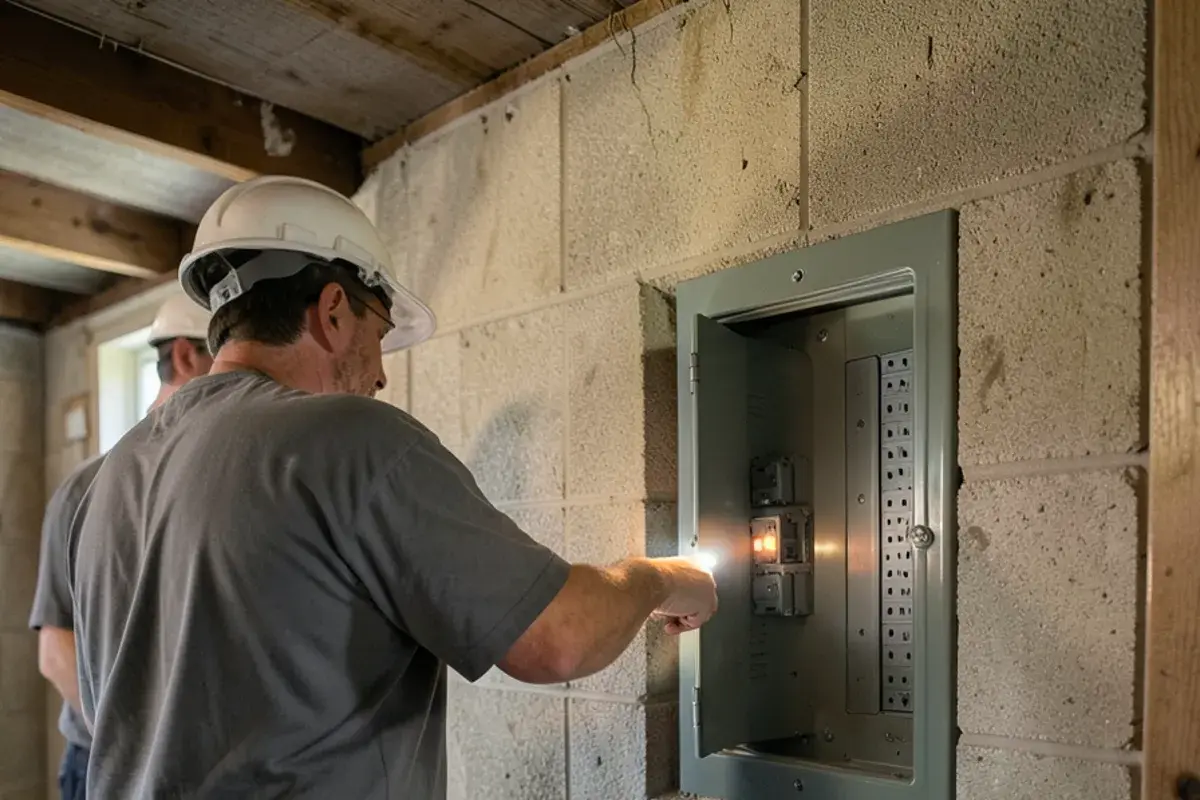
| Breaker | A breaker sitting between on and off | Push it fully off, then on, one time only |
| Ice | Frost on the copper lines or at the indoor coil | Leave cooling off, set the fan to on and let it thaw |
If the breaker trips again, leave it off. A second trip points to a shorted part or a seized motor, and forcing it can finish off a compressor that might have been saved.
Tell us what your system is doing
Our office is open Monday to Friday, 8 AM to 4 PM. Call and we will sort out the next step.
The first hour: cool the people, then the house
Treat body temperature as the deadline, not the indoor reading. Ready.gov tells people without working air conditioning to go to a cooling center or another cooled public place such as a library, and warns: "Do not rely on a fan as your primary cooling device." Your local health department can tell you what is open.
If you are staying put, these steps slow the climb:
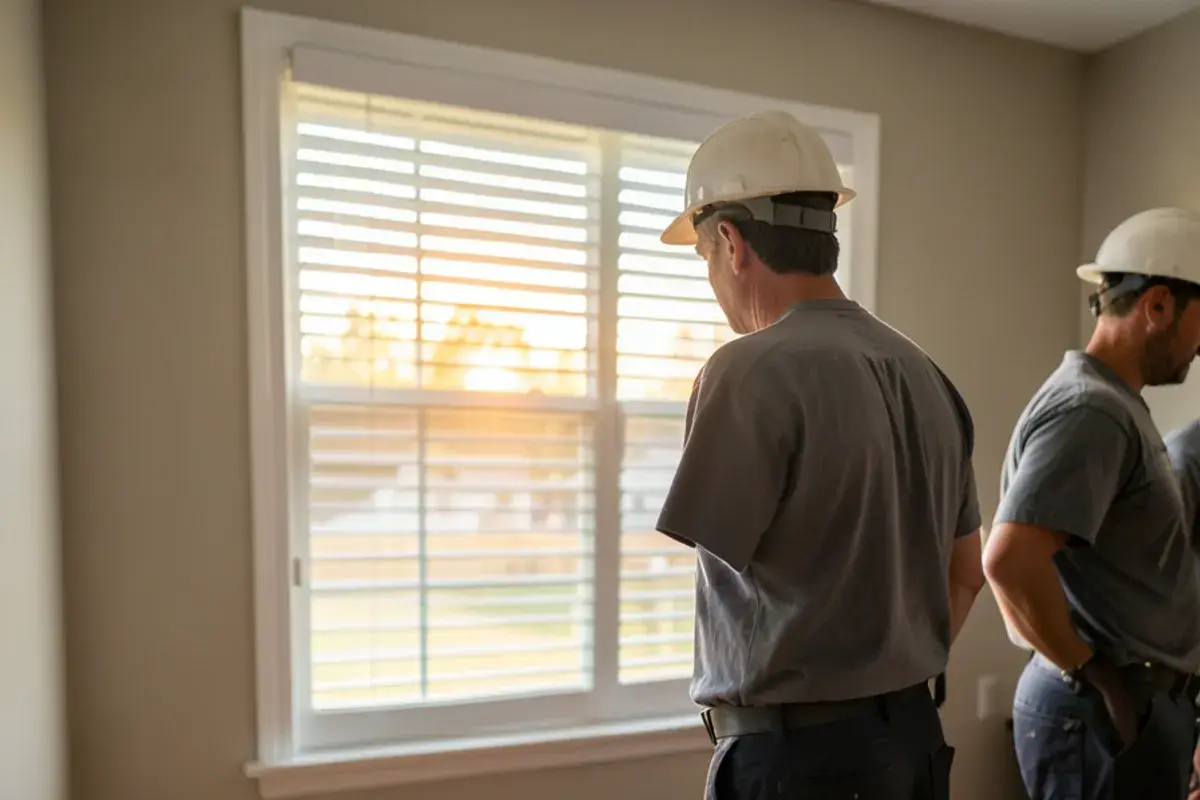
- Draw the blinds on the sun side of the house before the afternoon peak.
- Move everyone to the lowest level. A basement can run many degrees cooler than a second floor.
- Skip the oven, the dryer and the dishwasher's heat cycle until sundown.
- Drink water before you feel thirsty, and check in on anyone living alone.
Ready.gov singles out older adults, family members and neighbors as the people to check on. If a relative in that group is in the house, leave for somewhere cool first and sort out the repair by phone from there.
What makes a heat wave harder on equipment?
Long run times find the weak part. BestPlaces counts about 27.6 days a year above 90°F in Hermann, and a heat wave stacks several of them together with no overnight recovery. A compressor that has run all afternoon, a capacitor at the edge of its rating and a coil matted with cottonwood fluff all fail under exactly these conditions.
That is why the stop-and-start habit does damage. Do not keep flipping the system on to see if it catches. Each hard start pulls heavy current through a motor that may already be struggling, and a repair can turn into a replacement.
Skip the can of refrigerant from the internet, too. Refrigerant is not used up in normal running, so a low charge means a leak, and the EPA's Section 608 rule requires anyone handling it to be certified. Our AC repair page explains how the fault gets traced.
AC stopped working? What to do when night falls
Use the cooler outdoor air if there is any. When the temperature outside drops below the temperature inside, open windows on opposite sides of the house and put a box fan in one, blowing out. Close everything again before the morning sun gets going.
Sleep low. Put mattresses in the basement or on the ground floor, wet a towel for your neck and keep water by the bed. If the upstairs is still climbing past bedtime and someone in the house is frail, a night with relatives who have working air is the right call, not an overreaction.
Before you leave the house empty, turn the system off at the thermostat. A unit left calling for cooling can restart on its own in the middle of the day, with nobody there to hear what it does.
What if the power blinked when the AC quit?
Storms and heavy grid demand often arrive with a heat wave, so rule out power before you blame the system. Look at a neighbor's lights, and check your utility's outage page or phone line. Around here that could be the city, Ameren or a rural cooperative, so use the name on your bill.
Once power returns, keep the thermostat off for about five minutes so pressure in the system can even out, then turn cooling on once. A compressor forced to start against high pressure can trip the breaker, and that looks like a bigger failure than it is. Dim lights, a hum from the outdoor unit and a fan that will not turn are a different sign. Low voltage or a weak capacitor can do that, so shut it off and call.
Renters have one more step. Tell the landlord or property manager in writing, with the time and what you checked. About a third of Hermann's housing units are rented (BiggestUSCities), and a clear note lets the owner approve a repair quickly. If the home has a medical device that needs power, or a medicine that must stay cool, say so on the call. It changes how the problem gets handled, even when nobody can promise a time.
What to have ready when you call
Five facts shorten the phone call and the visit:
- The symptom in plain words: warm air, no air, ice, water, buzzing or silence.
- What you already tried, including whether a breaker tripped.
- A picture of the outdoor unit's data plate, or the model and serial number read aloud.
- Roughly how old the system is, if you know.
- Who is in the house, and whether anyone is at risk in the heat.
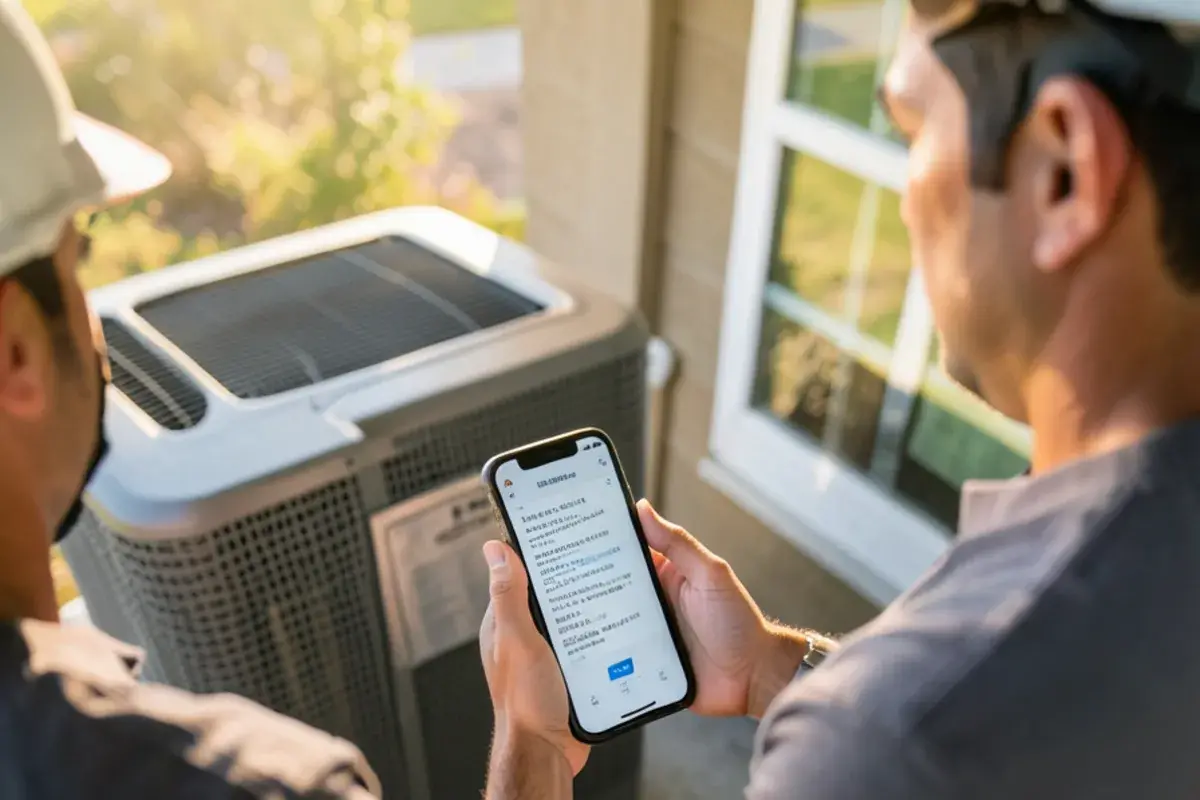
Distance is part of the reason. A home in Owensville is about 33 minutes and 29 miles from our Hermann office, so a good description means the likely parts ride along on the first trip rather than the second.
What we tell customers when a heat wave takes out the AC
Keep it simple and keep it safe. Do the four checks, get vulnerable people cool, then call (209) 563-1270. Weekday office hours run 8 to 4, and we are not going to promise a time we cannot keep. Tell us what is happening whenever it happens. One Google reviewer praised our quick response to an AC repair. That is one customer's experience, not a promise for every week of summer.
Once the crisis is over, look at why it happened. Our emergency AC repair page covers the urgent side, and a spring AC tune-up is the cheapest way to meet the next heat wave with a capacitor that still reads to spec. If the same system has now failed more than once, ask for a quote on the repair and a price on replacing it, side by side, before you decide.
Brian Grannemann
Owner, Brian Grannemann Services Inc, Hermann, MO. In business since 1998 across heating, cooling, electrical and plumbing work.